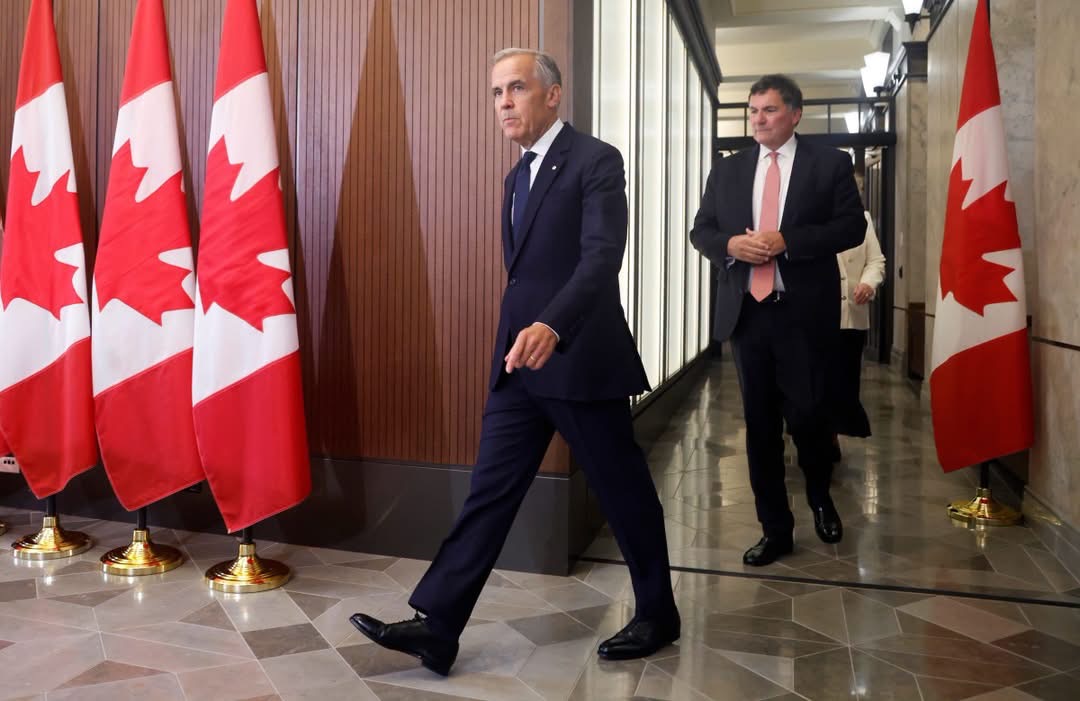

I was genuinely excited a few weeks ago. Word was that the United States and Canada were closing in on a real trade deal, the kind that unlocks actual prosperity instead of just producing another press release. I let myself hope it might go further than tariff schedules. I hoped it might revive infrastructure that had been left for dead, pipelines that could finally move Canadian oil and gas into American refineries instead of stranding it north of the border while we import from countries that hate us. That is what a real partnership between two enormous energy producing nations who happen to share the longest undefended border in the world is supposed to look like.
It fell apart. And it fell apart for a reason that should embarrass anyone still romanticizing Mark Carney as a sober technocrat who was going to be the adult in the room.
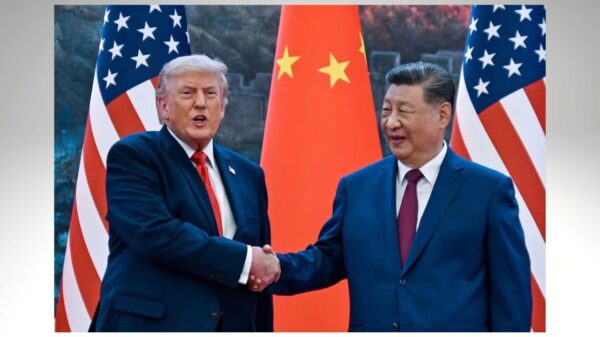
Canada did not walk away from this deal because the terms were unfair to Canadian workers. Canada walked away because Washington wanted real assurance that Chinese steel and aluminum could not keep entering the American market wearing a Canadian passport. The mechanism has a name in trade circles: transshipment. Take Chinese metal, run it through light processing or a Canadian mill, stamp it as North American content, and walk it into the United States duty free under the rules of a continental trade agreement that was never designed to launder Beijing’s overcapacity. Washington’s own trade office has flagged Canada as one of the primary enablers of exactly this kind of routing. That is not a paranoid American talking point. Canada’s own steel industry has spent months publicly denying it, which tells you the accusation landed somewhere real.
So when the moment came to choose, Carney chose to protect Canada’s ability to keep processing subsidized Chinese metal over a deal that would have benefited actual Canadian workers, actual Canadian industry, and actual Canadian consumers. He had just come off a January trip to Beijing securing lower tariffs on Chinese EVs and expanded Chinese steel remissions. He was not going to walk that back to satisfy an American president he has decided to treat as an adversary rather than an ally. That is the choice he made. Not being bullied. Choosing Beijing’s supply chain over Washington’s market.
Our own president is not behaving with dignity here either. Trump delights in trolling Canada. He always has. The “51st state” routine was trolling. Signing an executive order to rename Lake Ontario as “Lake America” is trolling, and frankly it is a little embarrassing for a president who otherwise has real cards to play. I do not think it advances American interests one inch. It gives Canadian media and Canadian politicians exactly what they want: a spectacle to point at instead of their own balance sheet.
And on the Canadian side, I have zero patience for Doug Ford. Telling the President of the United States to kiss his backside in the middle of a trade negotiation that affects the livelihoods of both countries is not statesmanship, it is a premier performing outrage for a domestic audience because performing outrage is easier than governing. I do not enjoy watching my president trade insults with a man I regard as a fairly pathetic figure on the world stage. Two leaders volleying juvenile lines back and forth does not make either country richer, safer, or more secure. It just makes for good clips.


Here is the part Canadians badly need to hear, though, and I say it as someone who genuinely loves this country. Canada cannot win a trade war with the United States. Not “will struggle.” Cannot. The numbers are not close enough to argue about. The American economy is roughly twelve times the size of Canada’s. Canadian exports to the United States dwarf the reverse, and Canada sends the overwhelming majority of everything it exports across that one border. China cannot absorb what Canada would need it to absorb, cannot replace American purchasing power, and cannot erase the pain an American president is fully capable of inflicting on a much smaller, much more dependent economy. Carney can talk about “dollar for dollar” retaliation all he wants. Dollar for dollar sounds tough until you remember whose dollar is worth more and whose economy has more dollars to spend.

Which brings me to the part of this story I think is actually the most important, and the part almost nobody in Canadian media wants to say out loud.
This fight is fantastic for Mark Carney. Not despite the pain it will cause Canadians. Because of it.
Every week this trade war dominates the news is a week Canadians are not looking too closely at what has happened to their own economy under years of Liberal government, Carney’s included, before and after he took the chair. Canada’s GDP per capita has been sliding for years while America’s has kept climbing. We are talking about a gap in the range of eighty five thousand dollars per person in the United States against roughly fifty five thousand in Canada. That is not a rounding error. That is two different economic trajectories that used to track much closer together and now do not, and the divergence accelerated almost exactly as Canadian and American policy paths diverged. Housing has gotten less affordable. Productivity growth has stalled. Young Canadians are now ranking near the bottom of global happiness surveys in their own age cohort, a genuinely alarming signal in a country this wealthy in resources and this blessed in almost every other way.


Canada is, in most respects that matter, a remarkable country. The scenery around Banff is some of the most beautiful on the planet, genuinely one of my favorite places on earth. Canadians produce some of the best comedians working today. Crime is comparatively low. Social cohesion, at least by the standards of the modern West, is still fairly strong. This is not a broken society. It is a talented, resourced, fundamentally decent country whose government has spent years pursuing policies that do not match the scale of what its people are capable of.
And if you actually pull the thread on that government, you find a pattern well beyond a sluggish GDP chart. In 2022, Ottawa invoked the Emergencies Act against truckers protesting COVID mandates and froze the bank accounts of protesters and their donors without a warrant, without a court order, without so much as a hearing first. A federal court ruled in 2024 that the whole thing was unlawful and unconstitutional, a clear violation of Charter protections against unreasonable search and seizure. The Federal Court of Appeal upheld that ruling in January of this year. It took the Canadian judiciary four years to say what should have been obvious the week it happened: a government does not get to freeze its own citizens’ money because it dislikes their protest.
Or look at what happened to Jordan Peterson, one of the most globally recognized intellectuals Canada has produced in a generation. Ontario’s own psychology regulator ordered him into mandatory social media retraining, under threat of losing his license, essentially for refusing to speak about gender identity the way the college wanted him to. Courts upheld the order. This is not a private employer setting workplace conduct standards. This is a government-chartered body using licensure as leverage to compel a man’s public speech.
Or look at Kamloops. In 2021 a First Nation announced ground-penetrating radar had found the remains of 215 children at a former residential school. Ottawa lowered flags for five months, created a new national holiday, and sent hundreds of millions of dollars in funding. Five years later there has still been no excavation and no exhumed remains. What was found were radar anomalies, which the community’s own later statements have described far more cautiously than the original announcement did. I am not going to tell you what is or is not buried there, because nobody has actually dug to find out. But an entire country reorganized its national conscience around a claim that, half a decade on, remains just that: a claim.
None of these are isolated missteps. They are what happens when a government gets comfortable substituting moral theater for the harder, less flattering work of running an economy well.
A trade war with an easy villain is the best thing that could happen to a government that does not want its citizens doing that comparison. Instead of asking why the country that shares their language, their culture, and roughly their entire southern border has pulled so far ahead economically, Canadians get to ask why the mean American president is picking on them. Instead of examining a socialist economic direction, inherited from the governments that came before Carney and continued under his own, they get to rally around the flag against Lake America jokes. It is a gift. Every strongman-adjacent populist in history has understood that an external enemy is the cheapest way to buy domestic political cover, and Carney, whatever else you think of him, understands it too.
There is one more piece of this that Ottawa and Toronto would rather not discuss, and it is the piece that should worry Mark Carney most. Take Alberta out of the Canadian economy and you find out exactly how little is actually holding the rest of it up. Albertans, through federal taxes alone, sent roughly a quarter trillion dollars more to Ottawa than they received back between 2007 and 2022, more than five times what British Columbia and Ontario contributed combined over the same stretch. Alberta does not receive equalization. Alberta funds it, along with a disproportionate share of everything else Ottawa spends money on, while absorbing lectures from Toronto and Ottawa about its oil sands and its politics. That is the giant sucking sound, and Albertans have started to notice it. Support for independence in Alberta is now polling essentially even with Quebec’s historic separatist movement, and when pollsters stress test the numbers across different scenarios, the share of Albertans who stay committed to independence actually runs higher than Quebec’s committed separatists do. There is a binding referendum question on the ballot this October. You cannot be this entitled, this parasitic, and this condescending toward the province paying your bills without eventually generating a reaction, and Alberta’s reaction has arrived.
Alberta is blessed the way Venezuela was blessed before Chavez finished wrecking PDVSA: extraordinary resources, and hard, capable people willing to extract them. That combination can carry a great deal of redistribution and absorb a great deal of federal dysfunction. It cannot carry it forever, and it is not obligated to.
And underneath all of it sits the reason Trump has good cause to be wary of Canada right now, separate from any of the trolling. The United States has spent decades providing the military security that let Canada spend comparatively little on its own defense and comparatively more on everything else, including a robust social welfare state. That arrangement only works if Canada’s strategic orientation stays fundamentally aligned with Washington’s. A Canadian government that turns toward Beijing for trade normalization while still expecting American defense guarantees is asking for a relationship it is not willing to reciprocate. You do not get to lean on the United States for security while leaning into China for growth and expect no friction. That is not trolling. That is a legitimate structural problem, and it deserves more attention than either country’s leadership is currently giving it.
I still want the deal I was hoping for a few weeks ago. I want the pipelines built. I want Canadian energy flowing south instead of stranded, and I want two allies who have fought wars together to act like it. But that deal was never going to survive a Canadian government unwilling to close the door on Chinese metal walking in through the back. Carney had a choice between a partnership that would have actually strengthened his own country and a posture that lets him govern by grievance for a while longer. He chose the posture. Canadians should notice which one they got.

Clayton Wood is a Knoxville Pastor, Attorney and contributing writer for tristardaily.com