
I want you to understand something that too few Americans, and too few people watching from overseas, seem to grasp. The sentence above could get someone arrested in China. Criticizing Xi Jinping, or comparing him to a cartoon bear he famously hates being compared to, is the kind of thing that gets people censored, detained, or worse under Chinese law. That is the country Canada chose over us this year while lecturing us about human rights.
When people call Trump a fascist and a dictator because a reporter got excluded from a press conference, they should know that real dictators exist in the world, and you cannot publicly whine and call them that on a daytime talk show day after day. Xi imprisons political opponents, suppresses independent Christianity through surveillance and arrest and has been enslaving the Uyghurs and other minorities. That is who Canada, and plenty of Trump’s domestic critics, are choosing to excuse. When someone describes every restriction on press access as fascism while minimizing the vastly more consequential repression carried out by Beijing, it is fair to ask whether their concern is really about human rights, or whether Trump hatred has overwhelmed their moral consistency. I am compassionate enough for the delusion that has gripped them that I genuinely wish they never have the horror of experiencing a real world leader who resembles the lies they spread about our president.
China is also in a demographic crisis, and China is ruled by intelligent liars, which is exactly why the crisis is hard to measure. What is established: China’s population is aging rapidly and has already begun declining. What is contested: how large China’s population actually is, and how badly the decline has been understated. Dr. Yi Fuxian, a researcher at the University of Wisconsin-Madison, has spent decades arguing that China’s population is overstated by more than 100 million people, possibly as much as 130 million, and that local governments are incentivized to overreport residents to pull in more central funding. His critics at the UN and elsewhere dispute the scale of it, but nobody credible disputes that the underlying collapse is real, only how bad it actually is and how fast it is moving. Evergrande’s bankruptcy was not a one-off like Enron in our system. It was a symptom of how much leverage and opacity run through Chinese property finance generally.
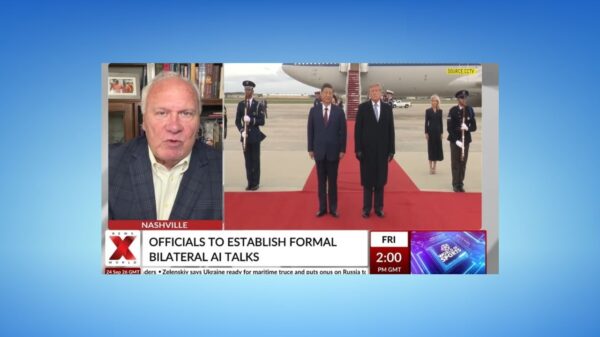
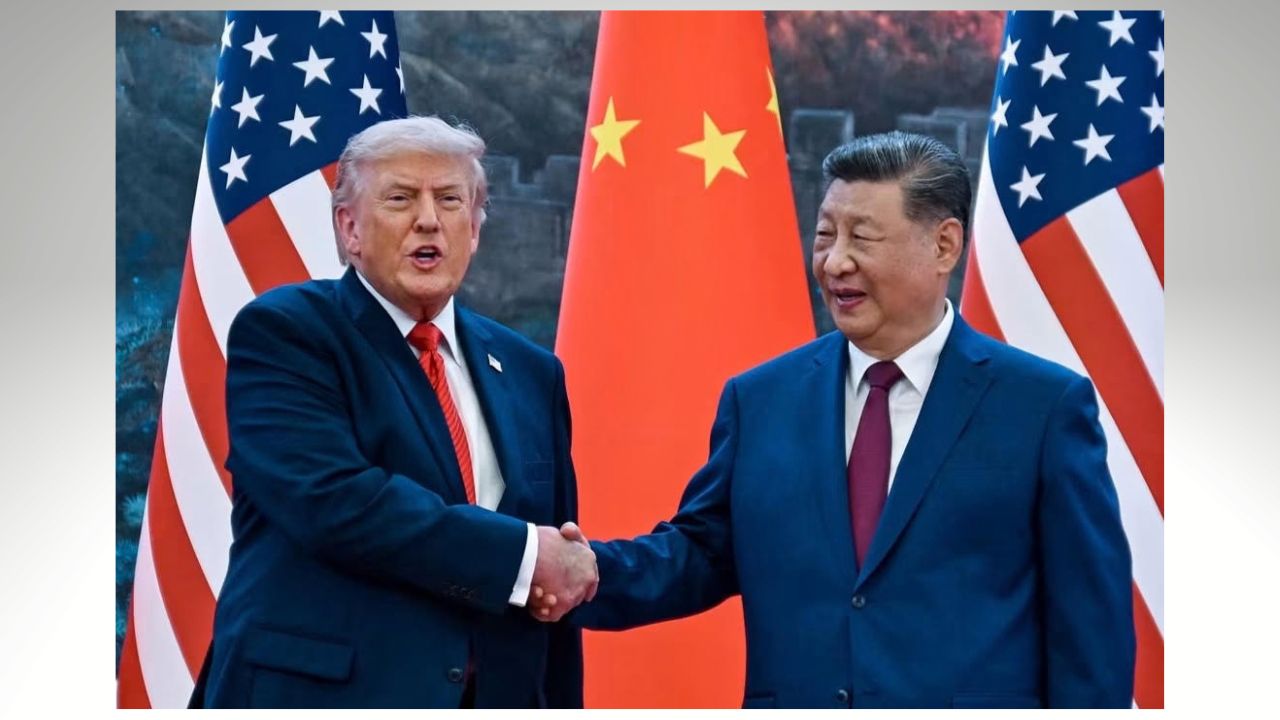
Xi landed at Joint Base Andrews last night, his first visit to the United States since 2015 and his second sit-down with Trump this year after the May summit in Beijing. Important discussions happen today at the White House, with an arrival ceremony, a military review in the Rose Garden, the bilateral meeting itself, and a state dinner tonight. Friday brings a private tea and a National Archives tour before Xi flies home.
Trump is essentially mirroring the reception Beijing gave him in May, and that has set off a genuine Republican revolt. Senate Armed Services Chairman Roger Wicker took the floor Tuesday and said that had the White House asked him, he would have told Trump not to roll out such a lavish welcome at all, and that Trump should remember every minute of the visit that his guest is a brutal, unelected, oppressive dictator whose military arsenal is aimed directly at the United States. Mitch McConnell, John Cornyn, Lisa Murkowski, and Thom Tillis sent a letter to Secretaries Rubio and Hegseth saying they are concerned Trump has described Taiwan as “a very good negotiating chip” in his dealings with Xi, and they are pushing him to approve both a 14 billion dollar Taiwan arms package and another 1.3 billion dollars in already approved defense funds that expires at the end of this month if it isn’t spent. The stakes on Taiwan are not abstract. The island is home to TSMC, which manufactures the large majority of the world’s most advanced semiconductor chips, the ones that run AI systems, smartphones, supercomputers, and military hardware. Lose Taiwan and you don’t just lose an ally, you lose a huge share of the physical foundation the entire AI race sits on, which is why some in Washington are calling this the modern Manhattan Project.
That premise is shifting already though. TSMC’s first Arizona fab is already producing chips with yields and quality on par with its facilities back in Taiwan, and the company just moved up its second Arizona fab’s production timeline to the second half of 2027, a year ahead of schedule, because AI demand is pulling it forward. For years the working assumption in Washington was the so-called Broken Nest plan, the idea that if China ever overran Taiwan, Taiwan itself would need to destroy its own fabs rather than let Beijing capture the world’s chip monopoly intact, an idea Trump’s own undersecretary of defense for policy, Elbridge Colby, has pushed publicly for years.
In my view, every fab that comes fully online in Arizona chips away at the premise behind that entire doomsday plan, because it reduces one of the most important economic prizes Beijing would gain from controlling Taiwan. Trump has already backed that shift with actual hardware too, not just factories. His administration approved an 11 billion dollar arms package to Taiwan in December, the largest single sale in the island’s history, on top of whatever comes out of the 14 billion dollar package still on his desk this week. And Ukraine has handed China an unplanned real time lesson in exactly how much harder an amphibious invasion has become. Drone swarms have made contested waters lethal in ways nobody had fully modeled a few years ago, and a beach landing across the Taiwan Strait under that kind of threat is a far less predictable bet for Beijing than rolling tanks across a shared land border ever was for Moscow.
I think our preening China hawks and (and possibly whoever is controlling Mitch’s autopen) need to stand down. I cannot stand Erdogan. I think his government has repeatedly acted against American interests. But I also recognize something about diplomacy that I sometimes forget when I’m angry: you do not have to like a dictator to negotiate with him. Part of what Trump is doing this week is setting a precedent for how deals actually get made. We are not going to helicopter in and arrest the heads of Cuba or North Korea. We are not going to bomb the meetings where the leaders of China and Russia sit down together. What Trump is trying to do is make deals, and you do not make deals by throwing a tantrum and refusing to give the head of a rival superpower the same honors he gave you when you visited his country in May. The China hawks in the Senate are talking tough and sounding foolish. Flatter Xi all you want, Mr. President, I only care about the points on the table.
The transactional approach also produces results on the human rights front the hawks accuse Trump of ignoring. In May, Trump personally raised the case of detained pastor Ezra Jin, who was released weeks later. This week he is expected to raise several more names directly with Xi, including Yufang Rong’s husband, a US nuclear scientist imprisoned since late 2024, and Min Zin, an American Myanmar expert arrested in China this June. The one case that hasn’t moved is Jimmy Lai, the Hong Kong publisher whose release Trump promised in 2024 and then called “a tough one” once he sat across from Xi in May. One freed, several on the table, one still stuck. Whatever you think of Trump’s rhetoric, the relevant question is whether direct engagement produces tangible results, and the release of Jin is tangible and hopefully will be followed by more.
Trump knows more about flattery than I ever will, and I think he wants Maduro and Khamenei to stand as a warning to Putin, Xi, Diaz-Canel, and Kim Jong Un, proof that there is a steel fist under the velvet glove whenever he decides to use it.
What we already have in hand starts with the Busan truce struck October 30, 2025, and it is worth explaining exactly what we gave up to keep getting rare earths. Back in late September 2025, the Commerce Department rolled out what became known as the Affiliates Rule. Before that rule, our export blacklist only covered the specific Chinese companies we had named, and firms got around that constantly by routing restricted American technology through subsidiaries we hadn’t named yet, one 2019 study found 264 Chinese state-owned enterprises alone controlled nearly 60,000 of them. The Affiliates Rule closed that loophole by automatically extending our restrictions to any foreign entity that is 50 percent or more owned by a company already on our blacklist. It hit Huawei’s whole network overnight. Then, in exchange for China agreeing to keep rare earths and critical minerals flowing to us, we agreed to suspend enforcement of that rule for a full year. China gave up something too, its own mirror image rule announced October 9, 2025, asserting Chinese jurisdiction over rare earth material anywhere in the world, even goods made outside China, if they contained as little as one tenth of one percent Chinese controlled rare earth content. Both sides put down a real weapon in that trade, and both weapons expire on nearly the same clock, which is exactly why this week’s summit and the rare earth deadline are tied together.
The May summit already produced real commitments on top of that. Xi agreed to help the US on Iran, and China committed to buying American soybeans, oil, and liquefied natural gas, plus 200 Boeing 737 jets. China has spent this month delivering on some of it, stepping up soybean purchases toward an annual commitment of 25 million tonnes through 2028, releasing Pastor Jin as noted above, and clearing the way for Chinese firms like Alibaba and ByteDance to buy Nvidia’s H200 chips, the ones Trump approved for export back in December. That chip decision is its own controversy. Nvidia is paying 15 percent of its revenue from those China sales straight to the US Treasury, an arrangement Trump’s own former China advisor Matthew Pottinger has publicly criticized as trading away a strategic technology advantage for 20 billion dollars and Nvidia’s bottom line. China is pushing hard in the other direction too, asking Washington to relax chip export controls further and to formally embrace Chinese AI models, while denying our accusation that Chinese firms are training their models by distilling the output of more advanced American systems. Trump himself has called AI safety warnings a hoax, even as Xi publicly calls for “safety and security in AI development,” which tells you the two men are not actually worried about the same thing when they say the word AI. It was Treasury Secretary Bessent, not Trump, who floated a mechanism for the two governments to communicate on major AI safety issues, and China watchers are openly skeptical it will amount to anything, noting that the US and China have run crisis hotlines before that nobody actually used when it mattered.
Before I get to our side of the ledger, it helps to know what Beijing is negotiating for, because a deal only makes sense once you see both hands. At minimum, Xi wants US arms sales to Taiwan slowed or stopped, a relaxation of semiconductor export controls, an extension of the trade truce, relief from tariffs, continued access to American technology, recognition of China’s security concerns around Taiwan, cooperation on Iran and the broader Middle East, and continued access to Western markets. Taiwan is expected to be one of his central demands this week, arms sales chief among them. Trump is not negotiating with Xi because Xi is likeable. He is negotiating because Xi has things America wants and America has things China wants, and that is the entire logic of the summit.
Here is what I’d add to our side of the list. A better trade deal, protection of intellectual property, and real assurances around AI are the obvious asks, but Taiwan is the biggest thing sitting under all of it, both the pending arms package and whether Trump trades away any predictability on future sales just to keep Xi happy for an afternoon.
We also need to put fentanyl and pharmaceuticals on that list, and I don’t think most Americans understand how directly this sits at Xi’s feet. China has one of the harshest domestic drug regimes on earth, trafficking a serious quantity of narcotics inside China can get you executed, and the country’s own overdose and addiction rates are near zero. That is a lesson China learned from its own history, the Opium Wars taught Beijing exactly what mass narcotic addiction does to a nation, and they built a system that refuses to let it happen again at home. For years, that same government allowed its chemical and pharmaceutical industry to ship the precursor chemicals for fentanyl to Mexican cartels with almost no restriction, chemicals that were then turned into the drug that has become the leading cause of death for Americans age 18 to 45. Synthetic opioid deaths peaked at nearly 78,000 in a single twelve month stretch in 2022 and 2023, and across the full run of this crisis the cumulative toll has passed 400,000 American lives. Then, when China finally decided to act, first with a 2019 crackdown and again with fresh export controls tied to the May summit commitments, the numbers moved fast. Fentanyl deaths fell to about 48,000 in 2024 and roughly 37,000 in 2025, a drop of more than half from the peak, and research reported by Axios in January credits China’s crackdown as a major driver of that plunge. China’s ability to materially change the American fentanyl supply simply by changing its own enforcement policy shows exactly how much leverage Beijing had, all along, over a catastrophe that has killed hundreds of thousands of Americans. Xi has lots of American blood on his hands.
Layer onto that our pharmaceutical dependence and the picture gets worse. Estimates vary, but China controls the raw materials or key starting chemicals behind a large share of the drugs Americans take every day, including much of what goes into amoxicillin, heparin, acetaminophen, and the active ingredients in many common antibiotics. For some critical drugs, including certain blood thinners, US dependence on Chinese sources is extremely high, with little domestic or allied alternative in place.
That may be a reason we are not pressing for compensation from the country that created COVID. The only reason we cannot prove the origins is because like the Chinese doctor who warned early about COVID (Li Wenliang) and then we were told died at 34 of COVID by Chinese authorities, the truth about COVID is buried.
Beijing’s opacity during the early outbreak and its refusal to give the world complete access to the underlying evidence have left enormous unresolved questions, and we have never received a dime of compensation for the mass death and economic devastation that followed. Put the fentanyl and COVID death tolls together and China’s fingerprints touch more American deaths than every war we’ve fought in the last hundred years combined. I don’t expect Beijing to send America a check. But every American who has lost a loved one to fentanyl or COVID should not be afraid to say where the death came from.
Which brings me to the question I keep getting asked. What are we actually doing about rare earths so November 10 doesn’t leave us at Beijing’s mercy again?
The answer is that we are finally building, but not fast enough to be independent by the time this truce expires. MP Materials in California is racing to commission a heavy rare earth separation line by mid-2026, backed by a Pentagon deal that made the Defense Department its largest shareholder and locked in a 110 dollar per kilogram price floor so China cannot simply crash the market the way it has before. Energy Fuels and Lynas have similar projects targeting late 2026 and 2027. Even combined, analysts expect non-Chinese separation capacity to stay well below 20 percent of global supply through 2028. We are rebuilding a supply chain China spent thirty years building and we spent thirty years letting die, and that gap does not close in two or three years.
Greenland is further out than the political fight over owning the island would suggest. Despite an estimated 36 million tonnes of rare earth elements, Greenland has produced zero commercial tonnes so far, and its most advanced project is not expected to reach commercial exports before 2029. Greenland could become enormously important in the 2030s by giving the West another major source of heavy rare earths and reducing China’s leverage over future supply. It does nothing for us in November.
So the real picture is this: real money, real mines, and real refineries are coming online in the US over the next eighteen months, and that is the fastest path off Chinese dependence we have. Greenland is the hedge that makes sure this never happens to us again once we are through this decade. But right now, at this summit, China still holds the rare earth card, and Xi knows it.
With semiconductors and precursors and rare earths, Trump is making the changes that will enable us to win in the long run against China, but we are several years away from being able to take harsh measures without creating real pain for ourselves.
What still needs to be settled this week is whether the Affiliates Rule truce gets extended, and on what terms. China wants it to run through the rest of Trump’s term, Washington wants to keep the leverage of a shorter leash, and it will likely land around a year. One proposal under discussion would pair roughly 30 billion dollars in duty free or reduced tariff imports with China following through on its May purchase promises, while Washington pushes for more purchases in return. China’s suspension of its own new rare earth export controls expires November 10, which is Beijing’s single biggest card at the table. Xi is expected to press hard on Taiwan again, a topic Washington would rather avoid, while Trump is expected to hold firm on export controls despite Xi’s objections. The two governments are not even planning a joint statement when it’s over. Each side will put out its own separate announcement aimed at its own domestic audience, which says plenty about how much real agreement exists behind the handshake photos.
This isn’t just a trade and Taiwan story, and it belongs here before I close it out. There is now a Republican-led congressional investigation into whether China is helping fund opposition to American AI data centers, the very infrastructure we need to win the AI race Xi is negotiating over this week. House Ways and Means Chairman Jason Smith and House Select Committee on the CCP Chairman John Moolenaar have asked Treasury and the IRS to investigate whether tax-exempt groups tied to Neville Roy Singham, a US expatriate living in Shanghai who promotes Chinese propaganda, are laundering foreign money into American advocacy against data centers. A Bitcoin Policy Institute report names CodePink and Tricontinental among the groups funded by Singham’s network, alongside Chinese state media amplification, and lawmakers have traced hundreds of millions of dollars into groups like the Party for Socialism and Liberation and the ANSWER Coalition. OpenAI itself caught a Chinese influence operation posing as Americans online, pushing AI-generated content about data centers and electricity costs, though OpenAI’s own investigator said the campaign had limited impact since the debate already existed on its own. Not every local fight against a data center is a Beijing operation, and a good chunk of the foreign money in this space traces back to older European climate philanthropy that has nothing to do with China. But the network, the funding, and the messaging are documented, and lawmakers are now investigating whether that network is being used to amplify opposition in ways that benefit Beijing. Jason Smith summarized it well: if China can sow discord and chaos in the American citizenry, they slow us down in the AI race, and they win. Every data center delayed by an artificially amplified fight is compute capacity China does not have to match, while Beijing keeps subsidizing its own AI buildout at home without any of the zoning fights we let paralyze ours.
It is worth remembering that China is the only rival who actually beat Trump during his first term. Beijing unleashed COVID on the world in the final year of that term, and it never fully honored the Phase One trade deal it signed with Trump in 2020, the one where China agreed to roughly 200 billion dollars in additional US purchases and then quietly walked most of it back. That is the only round Trump has lost to a foreign rival, and I am sure he remembers it.
This time he has been laser focused on China in a way his critics rarely credit. Look at the board: the Panama Canal deal reasserting American leverage over a chokepoint Beijing had spent two decades buying influence around, the pressure campaign in Venezuela, the push into Greenland for the rare earths under the ice, and a new agreement with Indonesia sitting directly beside the Malacca Strait, the passage through which most of China’s oil imports have to travel. Add Iran, where Xi agreed in May to help rather than obstruct, and you have a president who has spent this term systematically closing off the chokepoints and resources China would need in a real confrontation, months before he ever sat down with Xi this week.
The trade side of this deserves more credit than it gets too. While China still faces roughly a 30 percent US tariff under the current truce, Trump has spent this term negotiating Vietnam down to 20 percent, Indonesia to 19, Japan and Korea to 15, in exchange for those countries eliminating tariffs on almost all US exports and, in Vietnam’s case, accepting a 40 percent tariff on goods transshipped through Vietnam from China to dodge the China rate. American imports from China have fallen from about 439 billion dollars in 2024 to roughly 309 billion in 2025, while the rest of Asia kept selling us just as much as ever. Trump did not have to bring every Chinese factory home to weaken Beijing’s position. He only had to make China less indispensable, and the manufacturing and IP concessions coming out of places like Vietnam are quietly reshaping global supply chains in exactly that direction.
Fentanyl and COVID are the enormous bills that China owes, and Xi arrived this week hoping he wouldn’t have to pay it. One Washington analyst put the whole standoff in a single sentence this week, saying Trump believes the American economy only gets stronger from here, while Xi believes America is in what the analyst called hurtling decline and that time favors China. Neither man is clearly under any real pressure to bend. Trump will smile, toast Xi at the East Room dinner tonight, raise a few names of Americans he wants home, and try to get a deal anyway. That is not weakness. It is diplomacy. If the United States is powerful enough to make concessions costly, the question is not whether we should shake Xi’s hand. The question is what we get when we do.
Clayton Wood is a Knoxville attorney and pastor and a contributing writer to TriStar Daily.