
I. THE SOUTHERN STRIKES AND WHAT THEY TELL US
Let me start with what happened Monday, because it matters more than the diplomatic noise around it. The United States military conducted what it called self-defense strikes against Iranian missile launch sites and boats in and around the Strait of Hormuz. The
strikes came within hours of Iranian negotiators sitting down with Qatari mediators in Doha. The ceasefire was still technically in place. Strikes happened anyway.
That is not a contradiction. It is a posture statement.
The administration is telling Tehran, through the language it speaks most fluently, that the ceasefire is not a free pass to rearm and reposition along the Strait corridor. The Iranian units operating in the southern theater understand that what they do with boats
and launch sites is being watched in real time, and that the American response timeline is measured in minutes, not diplomatic cables. Monday was a demonstration. It was also a warning.
Iran’s Supreme National Security Council secretary Mohammad Bagher Zolghadr made his first public statement this weekend. “There will be no retreat”; he said, calling for unity so that “the Americans and Zionists would also be disappointed.” He is either performing for a domestic audience that still needs to believe the IRGC is winning, or he is genuinely committed to a position that leads to resumed full-scale operations.
Possibly both. But notice what he did not say. He did not say the deal is off. He did not declare the ceasefire terminated. The IRGC is trying to hold its domestic narrative and its negotiating position simultaneously, and the southern strikes are a reminder that the
clock is running.
II. SIXTY DAYS, THE WORLD CUP, AND THE LOGIC OF THE
PAUSE
There is a deal being discussed. The framework, reported by multiple outlets and confirmed in broad strokes by administration officials, involves a 60-day ceasefire extension, the reopening of the Strait of Hormuz, the lifting of the naval blockade, the
unfreezing of certain Iranian assets, and the beginning of negotiations over Iran’s nuclear program. Iran would agree in principle to dispose of its enriched uranium stockpile. The how of that disposal would be worked out during the 60-day window.
The American shorthand for their position is blunt and memorable: “No dust, no dollars.” Nearly a thousand pounds of highly enriched uranium must be addressed before Iran sees meaningful financial relief. The Iranians insist the nuclear question can only be
negotiated after a war-ending memo is signed. The gap between those positions is real, but it is not unbridgeable if both sides want a bridge.
Why would Trump want a pause right now? Several reasons, and they compound.
The World Cup begins this summer on American soil. The President of the United States hosting a global sporting event with a naval blockade choking the world’s oil supply and American gasoline prices elevated heading into summer is not a tableau any
White House communications operation wants. The World Cup is a legitimate pressure point toward de-escalation, and Trump is aware of optics in ways his critics perpetually underestimate.
More importantly, sixty days with an open Strait does something to the global economy that every serious strategist has to price. Iranian oil reentering the market, even partially, combined with the psychological relief of the Strait reopening, could push oil
below seventy dollars a barrel. I have been watching this number. At that price level, the downstream effects are not small.
III. OIL AT SEVENTY AND THE GEOPOLITICAL
MATHEMATICS
Seventy dollar oil helps China’s economy considerably. China has been absorbing Iranian crude through shadow fleet arrangements throughout this conflict, but not at pre-war volumes and not without significant transaction costs from the evasion infrastructure. Cheap and freely flowing oil through the Strait dramatically improves China’s economic position heading into the second half of 2026.
That is a real concession to Beijing. It is also a pressure valve that gives Xi Jinping something concrete to point to when he argues that the American-led order can still produce economic benefits worth cooperating with. Trump is making a bet that China’s
economic stake in stability is more durable than China’s ideological alignment with Tehran.
But here is what the commentary mostly misses: seventy dollar oil puts the Russian economy under pressure that is genuinely severe. Russia has been fighting in Ukraine for over four years. Four years of Western sanctions that were supposed to collapse the Russian economy and did not. Four years of a war that was supposed to take three days. Four years of Ukrainian resilience that has included drone strikes reaching deep inside Russian territory that Russians were told would never be touched. Epic Fury has given Putin three months of elevated oil prices, not four years of them. Those elevated prices have been a cushion, not a foundation.
Remove that cushion from a man who is already weakened, already under domestic pressure from a grinding unwinnable war, already governing a population that is bearing costs it did not choose, and the calculus inside the Kremlin becomes different in ways it has not been before.
Russia’s economy has survived sanctions far better than many Western planners predicted, but survival is not the same thing as strength. Moscow adapted through rerouted trade with China and India, shadow fleet shipping, wartime industrial mobilization, and elevated global energy prices that kept petrodollars flowing into the Kremlin even while Europe reduced direct dependence on Russian gas. The war economy has concealed structural weakness by flooding strategic sectors with state spending, but that model becomes dramatically harder to sustain if oil falls and stays low.
Russia’s federal budget remains deeply dependent on hydrocarbon revenue. Even after diversification efforts, oil and gas still account for roughly a third of federal revenue and an even larger share of export earnings. Wartime spending has exploded while demographic pressures, labor shortages, inflation, and sanctions-related technology constraints continue to compound underneath the surface. A Russia earning eighty-five dollar oil can sustain a grinding war much longer than a Russia forced to operate in a world of sixty-five dollar oil.
That distinction matters enormously. Elevated energy prices created by the Strait crisis gave Putin breathing room during the past several months. But if the Strait fully reopens, insurance rates normalize, tanker traffic stabilizes, and Iranian crude reenters global markets at meaningful scale, the pressure shifts rapidly back onto Moscow. A war machine financed by extraordinary energy margins suddenly has to survive on ordinary ones.


That is why the arithmetic matters more than the rhetoric. Russia does not need to collapse for the strategic equation to change. It simply needs the financial pressure to rise high enough that the coalition sustaining the war begins asking whether continuing the conflict is worth the cost. Wealthy elites, regional power brokers, industrial managers, and security figures do not have to become moral opponents of the war to become practical opponents of its continuation. They only have to conclude that the current trajectory is consuming more wealth, stability, and future opportunity than victory can realistically deliver.
I want to say this plainly because I think it is true: the Iran deal, if it produces an open Strait and oil below seventy, may be the most effective lever available to end the war in Ukraine. Not through diplomacy about Ukraine. Through the math I presented above of petrodollars. I am not predicting the fall of Putin. I am saying that an open Strait and oil at sixty-five may do more for Ukraine than any weapons package that has been debated in the past two years.
And if the war in Ukraine ends, think through what follows. Ukraine rebuilds. Moldova stabilizes (and I have argued and will continue to argue that the end of the war in Ukraine needs to include letting Putin claim he “rescued” the Russians trapped in Transnistria). The agricultural and industrial capacity of the Ukrainian breadbasket, one of the most productive in the world, reenters normal trade patterns. Russia, freed from the economic hemorrhage of a war it cannot win and cannot afford, has the option of a genuine reintegration with global markets. Its population, which has been bearing costs it did not choose, gets some version of relief. These are not guaranteed outcomes. They are available outcomes that a single geopolitical pivot makes possible.
IV. THE ABRAHAM ACCORDS AND THE SILENCE IN THE
ROOM
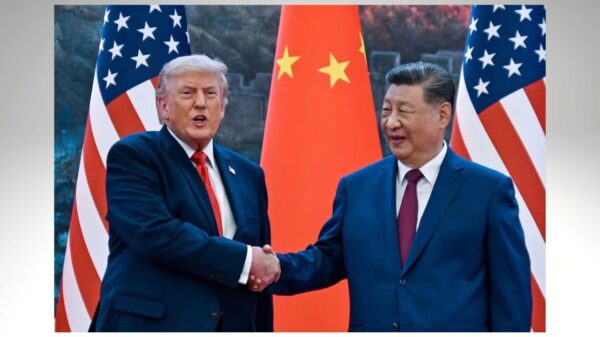
Trump expanded the ambition of this moment in a way that caught most analysts off guard. He asked Saudi Arabia, Qatar, Pakistan, Turkey, Egypt, and Jordan to join the Abraham Accords with Israel. The request went out in the context of a phone conference with Gulf allies.
Axios reported the response and the word they chose matters: silence.

I want to give that silence its full weight, because I think it has been undercovered. These governments were asked, on a call in which they were already positioned as mediators and partners, to take a step that would require them to publicly normalize relations with a Jewish state while a war connected to that state is still active and while the Palestinian question remains unresolved on any terms those populations would accept. The silence is not puzzlement. It is calculation. They know what Trump is asking. They know what it would cost them domestically. And they are not yet willing to
pay it.
But Trump made the ask anyway, and that is the thing worth examining.
“We want you to rescue us with your military might”.
Kuwait said that in 1991. Saudi Arabia has said that repeatedly from a nation state that would not exist without Western power creation (the House of Saud being propped up as a friend to the CIA and Bush family for longer than I have been alive). Come rescue us, but no accounting for the fact that we funded September 11th ideologically, no pushback that we won’t let your soldiers practice their religion in our nations as they protect us. No payment as American taxpayers sees trillions added to the national debt in protection of nations with massive sovereign wealth funds who cannot protect themselves and who keep pulling us into wars they started. And while American soldiers bleed to protect Gulf monarchies, many of those same governments still refuse to fully acknowledge the legitimacy of the regional order required for peace.
Trump is saying, “no”.
He is saying that we will have peace in the Middle East, and it will include ending the insanity of pretending that we are all friends when some in the room keep funding Islamist terror and refuse governmentally to acknowledge the right of Israel to exist.
Here is the historical reality that the Abraham Accords conversation requires: the Nakba, as it is taught and repeated in most Western progressive discourse today, is a story built on a fundamental inversion of events. The catastrophe of 1948 was not primarily a story of forced expulsion by Israeli forces. It was a catastrophe born from the confidence of the Arab Muslim states surrounding Israel that they could annihilate the new Jewish state and that the Arab residents of the region should stand clear while they did it. The evidence for what I am saying is clear. They could not believe they lost. Seven armies. One brand new, outnumbered, under-equipped state born three days before the war began. And the armies went home having failed to accomplish what they announced they were coming to do.
The displacement that followed flowed primarily from that military failure and from the flight of populations who expected to return behind victorious armies that never came back victorious. Israel did not ethnically cleanse a peacefully coexisting population. It
fought a war of survival and won it.
What has followed across nearly eight decades is not a peace process. It has been a sustained, multiply funded campaign to finish what 1948 did not. Iran has been the most aggressive financier of that campaign. Hamas, Hezbollah, Palestinian Islamic Jihad, the
Houthis: these are not organic expressions of religious and national aspiration. They are instruments of Iranian strategic policy, maintained because a proxy war against Israel is more economical than a direct one and because the Palestinian grievance is useful
domestically for every Muslim-majority government that wants to explain its own failures by pointing at Jews.
Trump is attempting to break that architecture. By asking the Gulf states, the regional powers with the most to gain from a stable and prosperous Middle East, to formally join a framework of normalization with Israel, he is asking them to stop using the Palestinian question as political cover and to start treating the region’s future as a business proposition that requires Israel’s participation rather than Israel’s elimination.
The rulers of these states do not follow Islamic law in any serious sense. They are managing populations that do, or populations that could be mobilized by those who do.


The Abraham Accords ask threatens the utility of the Israel scapegoat for those governments. That is why the room went quiet. Trump understood exactly what he was asking and asked it anyway.
There are significant reasons to doubt this succeeds in the near term. The political cost in each of those capitals is genuinely high. The Palestinian street in Gaza and the West Bank is not going to celebrate normalization. Regional leaders who sign will face
internal pressure that some of them may not be able to manage. And the deal structure required to bring Saudi Arabia in particular to a formal agreement with Israel has always involved conditions on Palestinian statehood that no Israeli government in the current
political environment can accept.
But Trump has demonstrated that the American position is to push the question, not defer it. That alone changes the negotiating environment for years.
V. WHO MAKES A DEAL FOR IRAN?
Here is the problem I have been writing about since the beginning of this series.
President Pezeshkian gave an interview this weekend saying Iran is ready to reassure the world it is not seeking nuclear weapons. He said negotiators will not compromise Iran’s honor and dignity. Iranian Foreign Ministry spokespersons have been issuing
statements suggesting the two sides are in the “final stage” of a memorandum of understanding. The language sounds like deal-making. Meanwhile, Iran’s state-backed ISNA news agency quoted a senior Iranian diplomat saying Iran has made no commitment whatsoever on nuclear issues in the initial agreement, including on highly enriched uranium. Both of those things cannot be true at the same time. One of them is for foreign consumption. The other is for the institution that actually decides.
None of those people control the enriched uranium.
The IRGC controls the enriched uranium. The Supreme Leader, whose health is the subject of considerable speculation and whose public appearances have been notable for their absence, issued a directive reportedly prohibiting the export of the stockpile.
That directive was issued by the institution with the guns. The civilians who are speaking to Qatari mediators in Doha represent a government that does not have the authority to deliver on the most consequential element of any agreement.
If you want proof of the gap, look at what happened this morning while Iran’s negotiators were sitting in Doha. Mojtaba Khamenei, the son of the Supreme Leader and his father’s successor, published a new message. He called the war against the United States and Israel a victory for the Islamic resistance. He said Israel is nearing the final stages of its “cursed demise.” He declared that America will no longer have safe military bases in the region. He called on Iranian Hajj pilgrims to spread the message of Iran’s victory to Muslims worldwide. He invited all Islamic nations to unite toward a new regional order.
That is not the language of a country ready to make concessions. And Mojtaba is not a peripheral figure making noise from the margins. He is the heir apparent of the institution that controls the uranium, the decision-making structure, and the guns. His
message is the message that matters.
Whether a disfigured Mojtaba hiding in a cave or bunker somewhere actually wrote the statement or if he is still being used as a symbol while he slumbers in a hospital bed, is somewhat irrelevant at this point. He lives or he does not, but he is the symbolic legitimacy for an IRGC that needs his voice as they decide Iran’s future and seek to continue down the maximalist path of death and destruction (tied to their religious beliefs of ushering in the apocalypse). Western negotiators often convince themselves that because the civilian diplomatic layer appears rational, educated, polished, and internationally fluent, the revolutionary core must ultimately be governable through ordinary statecraft. But the problem has never been the sophistication of the diplomats. The problem is that the diplomats do not control the rockets, the uranium, or the revolutionary institutions. A movement rooted in apocalyptic ideology cannot be analyzed purely through the assumptions of secular realism. People who talk to brilliant Iranians in nicely draped suits who carry briefcases and have perfectly coiffed hair and wear cologne, are sometimes not able to understand in those rooms full of taqiyya that they are talking to agents for a death cult. The death cult is now fractured, but we cannot make a deal with the rational and reasonable and well-educated elites if the madmen still control the rockets and missiles and mines.
Mixed messages work great for the IRGC, and indeed, reasonable and kind things said in English or French while death and destruction is loudly proclaimed in Farsi has been the pattern for longer than I have been alive. Talk while the negotiators talk. Signal the faithful while the diplomats signal conciliation. Never let the civilian layer commit to anything the revolutionary layer has
not already decided.
The dual power structure has always existed. The elected government and the revolutionary institutions have always operated in parallel, with the revolutionary institutions holding final authority on security and nuclear matters. What has changed is
that the gap between the civilian face of the negotiation and the revolutionary core that has to sign off has never been more visible or more consequential.
Russia wants this war to continue. The elevated oil prices have been a lifeline for a Russian economy that was supposed to have collapsed under Western sanctions and has instead been sustained by the global energy market distortion the war created.
Putin has every incentive to keep the IRGC committed to non-resolution. If Russian advisors are in contact with IRGC leadership, and there is no reason to believe they are not, those conversations are not encouraging flexibility.
China wants this war to end. Badly. The disruption to global energy markets and shipping has been costly to an economy already under pressure from trade tensions.
Beijing has been positioned as a potential honest broker but has been unwilling to use its leverage over Tehran as forcefully as Washington has requested. The calculus for China is that a deal that ends the war and reopens the Strait is worth more than whatever influence they retain over an isolated Iran. At some point, if they believe a deal is genuinely achievable, they may push harder.
The Gulf Cooperation Council states are desperate for a permanent resolution. They do not want a sixty-day pause that restarts as a shooting war after the summer ends. They want the architecture of the conflict resolved in a way that does not leave them exposed to
Iranian retaliation the next time the ceasefire breaks. Their desperation for a durable settlement is why Pakistan and Qatar have been such active mediators. They are not doing this as a favor. They are doing this because the alternative terrifies them.
The question of who delivers Iran to a deal is the question that has not been answered in eighty-seven days of this conflict. It may be that no one can. It may be that the IRGC’s internal institutional logic, its theological commitment to the uranium as an
existential asset, and its forty-year identity as an institution defined by resistance to American pressure makes a genuine agreement impossible regardless of economic conditions. If that is true, then the sixty-day pause, if it happens, is a pause. Not a conclusion.
Rubio himself acknowledged Tuesday that the deal is being held up by disputes over wording, describing disagreements over a single word. When the word in dispute determines what Iran commits to do with its enriched uranium, the word is the entire question. A
senior American official acknowledged Sunday that the agreement would not be signed because the Iranian system did not move fast enough. That is the diplomatic translation of a structural reality: the civilians at the table in Doha cannot get sign-off from the people who actually decide, and the people who actually decide may not currently have a single accountable decision-maker at the top.
VI. THE PRIZE WORTH SEEING CLEARLY
I want to name the full scope of what is available, because I think the political commentary has been too focused on the individual transactions to see the landscape they are part of.
If the war in Iran ends durably. If the Strait opens and stays open. If oil falls to sixty-five or below and stays there through 2026. If Russia’s economy comes under sufficient pressure that the war in Ukraine becomes politically unsustainable for Putin. If the
Abraham Accords expand to include the major Arab states of the Middle East. If, as a consequence of all of that, Cuba and Venezuela, both of which have been sustained by the anti-American coalition that Russia and Iran anchored, face a different strategic environment and begin genuine opening processes.
What you have is not just a foreign policy win. You have the conditions for an unprecedented expansion of global economic participation. Ukraine rebuilds. Russia reintegrates. Lebanon, which has been systematically hollowed out by Hezbollah’s use
of its territory as an Iranian forward operating base, has a chance at something that looks like sovereignty and peace and prosperity.
Gaza, which has been governed for nearly two decades by an
organization whose primary output was tunnels and rockets, has a chance at something that looks like development. Iran itself, with ninety million people and a civilizational heritage that the IRGC has spent forty-five years trying to suppress, has a chance at
something that looks like freedom.
The people of those nations have not been choosing this. Cuba’s population did not choose to live in the economic equivalent of a stopped clock. Venezuela’s population did not choose hyperinflation and enforced dependency. The people of Gaza did not choose to be the permanent hostages of a conflict their leadership required them to sustain because the leadership’s power depended on sustaining it. The Iranian people, as I have written throughout this series, have been trying to choose differently for
decades, at enormous personal cost, and the regime has met each choosing with live ammunition.
Leaders who have made their populations poor and isolated and afraid are bad for business. That is not a cynical statement. It is a statement about what human beings do when they are free to participate in normal economic life. They trade. They build. They
educate their children and open businesses and travel and buy things. The suppression of that participation, enforced by the IRGC in Iran, by the Castro apparatus in Cuba, by Maduro’s machinery in Venezuela, by Hezbollah in Lebanon, has cost the global
economy trillions of dollars of productive capacity over decades. Removing those suppressors does not just help the people living under them. It helps everyone.
I am not naive about the timeline. None of this happens fast. None of it happens cleanly.
The day-after planning deficit I have been writing about since Day One of this series remains the most urgent unfinished work in Washington. Removing a tyranny does not automatically produce a functioning state. History has demonstrated that repeatedly and
recently. The architecture of what comes after the IRGC matters as much as the removal of the IRGC, and the administration does not seem to have as clear of a plan for the day-after problem as it does for the military campaign.
But I can see the prize. I can see it clearly enough to name it. And it is worth naming, because the commentary that focuses only on the risks and the failures and the gaps is missing the thing that makes this moment genuinely historic.
VII. THE NEXT TWO WEEKS
Trump told his team not to rush. He told Truth Social that time is on the American side.
He is not wrong about that. The economic pressure on Iran continues to compound. The IRGC cannot make payroll reliably. The civilian population is bearing costs that do not
diminish with time. The regime’s internal cohesion is under stress that the unified external front has been papering over.
The administration’s position is clear and worth stating in full: if Iran disposes of its highly enriched uranium, it will receive substantial economic relief and the prospect of genuine reintegration into the global economy. If Iran does not, the military option remains on the table and the economic pressure continues. The phrase “No dust, no dollars”; is not a negotiating position. It is a binary.
What I am watching for in the next fourteen days: whether the 60-day framework gets signed in a form that includes a genuine commitment on the uranium, even a procedural one that kicks the disposal mechanism to negotiation within the window. That would be enough for Trump to call it a win. It would be enough to open the Strait. It would be enough to start the oil price movement I described above.
What I am also watching for: whether the IRGC uses the pause to move the enriched uranium to deeper or more dispersed storage. If the intelligence community detects that kind of movement, the diplomatic track collapses instantly. The Americans have made
clear they know where the material is. Moving it in ways that suggest concealment rather than preparation for removal would trigger exactly the strike sequence that resumed military action advocates have been arguing for.
This weekend produced one of the more clarifying political spectacles of the entire conflict. Conservative hawks spent Saturday and Sunday attacking a deal that had not been signed. Pompeo said the emerging framework would “pay the IRGC to build a
WMD program and terrorize the world.” Republican senators issued statements.
Commentators who had been supporting the war effort lined up to declare the deal a betrayal of everything the campaign had achieved. The deal they were attacking did not exist. It had not been signed. The American position had not changed. And Trump, who had watched all of it unfold, posted Sunday that he told his team not to rush, that time is on the American side, and that any deal he makes will be a good and proper one, nothing like what Obama gave away. He anticipated the critics before they finished
forming their critiques and answered them before they asked.
The ceasefire that is not really a ceasefire continues. The strikes in the south continue.
The negotiations continue. The uranium sits in Iran, and the Supreme Leader’s directive says it stays there. Those facts have not changed.
But the prize has not moved either. And sometimes the thing worth fighting for is worth fighting for precisely because it is not easy.
Peace in the Middle East? We may not have to wait for the oil to run out to see it.

Clayton Wood is a Knoxville lawyer, pastor and Contributing Writer for TriStar Daily.