
One afternoon in the 1990s, my literature professor confidently told our class that Petrarch invented the language of romantic longing in Western poetry using a “conceit”.
I was puzzled and asked her if she meant in the sonnet verse form. She said no, he was the first in literature.
We were both about to be stunned. I quoted some Song of Solomon and she revealed she had never read it before.
She was not hostile to Christianity as best I could tell. She was a little embarrassed. She was a very smart person and overall a good teacher.
She simply had never been given the Book.
Think about what that means.
Petrarch did not write for people who had never read the Bible. He assumed they had. Every educated reader of his age would have recognized the imagery immediately. Gardens. Vineyards. Gazelles. Lilies. Love stronger than death.
Petrarch refined that language. He did not invent it.
The conceit worked because his readers already knew the original melody.
My professor was every bit as intelligent as Petrarch’s readers. She simply inherited an education that had forgotten the Book they knew.
Somewhere between the fourteenth century and today, we have managed to produce graduates who know less about the foundations of Western civilization than Petrarch expected ordinary educated readers to know.
That is not progress.
It is amnesia.
We have raised a generation that loves literature but cannot follow the map because we removed the legend.
That should alarm us.
Instead, many people celebrate it.
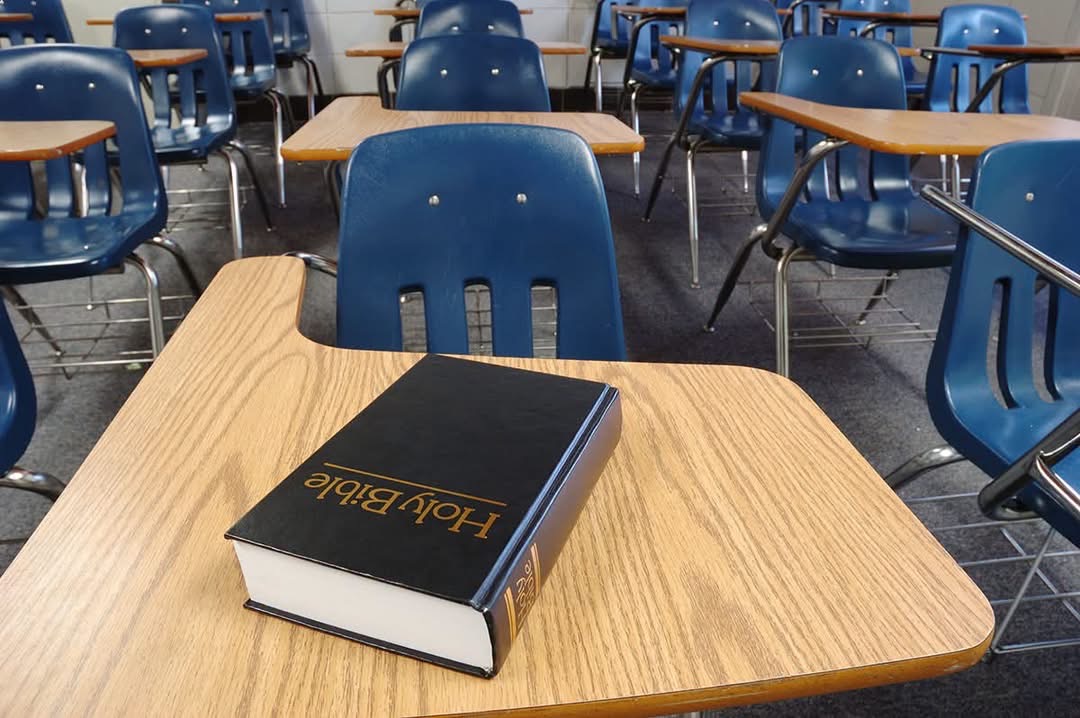
TEXAS WANTS CHILDREN TO READ THE BIBLE. PEOPLE ARE FURIOUS.


The Texas State Board of Education approved a reading curriculum that includes Bible stories and passages for millions of public school students.
Before the vote was even complete, the accusations began.
Theocracy. Christian nationalism. Separation of church and state.
I have spent decades as a constitutional attorney watching people invoke a constitutional rule that does not exist.
During those years I wrote letters that never should have been necessary.
No, a little girl cannot be forbidden from bringing her Bible to school.

No, students do not surrender their First Amendment rights when they walk through the schoolhouse doors.
No, students do not need government permission to gather voluntarily around the flagpole before school and pray.
No, a teacher answering a sincere question about Christianity is not violating the Constitution.
Again and again I encountered teachers and administrators who sincerely believed these things were illegal. Many even professed to be Christians. They were not trying to persecute anyone. They had simply absorbed a constitutional myth.
That may be one of the most successful myths in modern American history. Millions of Americans came to believe that religious liberty required public ignorance about Christianity.
It never did.
THE PHRASE IS NOT IN OUR CONSTITUTION
The phrase separation of church and state is not in the Constitution.


Every American ought to know that.
It comes from Thomas Jefferson’s 1802 letter to the Danbury Baptists in Connecticut. The Baptists feared the federal government might establish a national denomination and interfere with their churches. Jefferson assured them it could not. His famous wall protected the church from the state. It did not require the state to pretend Christianity never shaped America.
Those are two entirely different ideas.
Here is something else most Americans do not know.
The phrase they invoke to remove the Bible from public life does not appear in our Constitution. But explicit constitutional language separating church and state did appear in the constitution of the Soviet Union. Article 52 of the 1977 Soviet Constitution mandated strict separation of church and state and school from church.
The Soviets understood exactly what they were doing. Remove the transcendent foundation. Replace it with the state. Control what children are taught about the world they inhabit.
When Americans reach for that phrase to scrub the Bible from public life, they are borrowing from Moscow, not Philadelphia.
Jefferson’s wall was built to protect the church from the state. It was never built to remove the Bible from American life.
WHAT JEFFERSON ACTUALLY PUT IN SCHOOLS
In 1805 Thomas Jefferson served on the Washington, D.C., school board. The Bible and Isaac Watts’ hymns were among the texts used to teach children to read.
The man most often invoked to keep the Bible out of schools helped oversee a school system that used it.
America’s earliest public schools did not treat Scripture as contraband. They treated it as the indispensable literary and moral foundation of an educated people. The New England Primer did the same. Not because the government was establishing a denomination. Because the founders understood that self-government required a morally and historically literate citizenry.
WHAT THE FOUNDERS ACTUALLY SAID
Joseph Story, one of the greatest constitutional scholars in American history and Supreme Court justice, argued that Christianity was indispensable to the moral foundation of a republic.
John Adams wrote that our Constitution was made only for a moral and religious people and was wholly inadequate to the government of any other. He also wrote that the general principles on which the Founders achieved independence were the general principles of Christianity.
These were not obscure voices. They were among the principal architects of the American republic.
THE AUTHORS YOU LOVE CANNOT BE UNDERSTOOD WITHOUT IT
The Bible is the single most influential literary work in the history of the Western world. That is not a devotional claim. It is a historical one.
Consider the writers who have shaped English literature most deeply. John Donne, whose Holy Sonnets are among the most transcendent poems in the language, wrote from inside a biblical imagination so complete that separating his faith from his verse is like separating salt from the sea. Christopher Marlowe, writing before the King James Bible even existed, was already drawing on Scripture’s moral universe. Samuel Taylor Coleridge’s greatest works are drenched in guilt, grace, and the longing for redemption. Percy Bysshe Shelley spent his life arguing with the God he could not stop addressing. Milton built an entire epic on the third chapter of Genesis.
Then Dostoevsky. Tolstoy. Dickens. Eliot. Faulkner. Flannery O’Connor. Steinbeck.
They assumed you knew Eden. Exodus. David. The prophets. The Cross. The Resurrection. The Prodigal Son. The Good Samaritan. The language of sacrifice. The language of redemption. The language of grace.
You can read their words. You cannot fully enter their world.
My professor was not suffering from a broken mind or imagination. She simply inherited an education that forgot the Book every educated reader in Petrarch’s world already knew. The moment I read the Song of Solomon, she recognized it immediately.
The knowledge had not disappeared. It had simply never been handed to her.
That recognition is what we are withholding from millions of children. That is not education. It is cultural amnesia dressed up as neutrality.
WHAT WE ARE ACTUALLY LOSING
As a Baptist, I believe deeply in religious liberty. Government cannot make anyone a Christian. Faith cannot be coerced.
But protecting religious liberty is not the same thing as pretending Christianity contributed nothing to the civilization we inherited.
Those are radically different ideas. One protects liberty. The other erases memory.
Civilizations do not collapse only because they forget how to build. They collapse because they forget why they built.
The people angry about Texas are not merely arguing over a curriculum. They are arguing over whether children should know the Book that shaped our law, our literature, our language, and our civilization.
I still think about that professor.
She was intelligent. She recognized the truth the moment she saw it. The knowledge had not vanished. It had simply never been given to her.
We are about to do the same thing to millions more children.
A civilization cannot remain strong after it forgets the Book that taught it how to read itself.

Clayton Wood is in Knoxville Pastor, Lawyer, and contributing writer to TriStar Daily.