
Lindsey Graham died last night. He was 71 years old, and his office called it a brief and sudden illness. This morning my phone was full of reactions, and most of them were not grief. They were disbelief.
He was just in Ukraine. Maybe the Russians got to him. It is possible. Graham had made plenty of enemies as a stalwart defender of both Ukraine and Israel, and I will not pretend otherwise. But he was also seventy one, living in a fallen world, the same one the rest of us live in, where hearts stop and bodies simply wear out. That is a sufficient explanation on its own, and yet it was almost never the first one offered.
I noticed the same instinct in myself years ago when Antonin Scalia died at 79 on a hunting trip. Who benefited? Who might have wanted him gone? It took me a moment to remember that seventy nine year old men die, hunting trip or not. Mitch McConnell is having health problems now as well, and I expect we will hear the same refusal at work when his time comes, whatever that time turns out to be.
Moses prayed, teach us to number our days, that we may gain a heart of wisdom. He did not ask God to help him avoid thinking about death. He asked for the opposite, that he would count his days honestly, because that counting is what produces wisdom. A people who cannot bring themselves to believe that death is real will not live wisely in light of it, and I do not think we can.
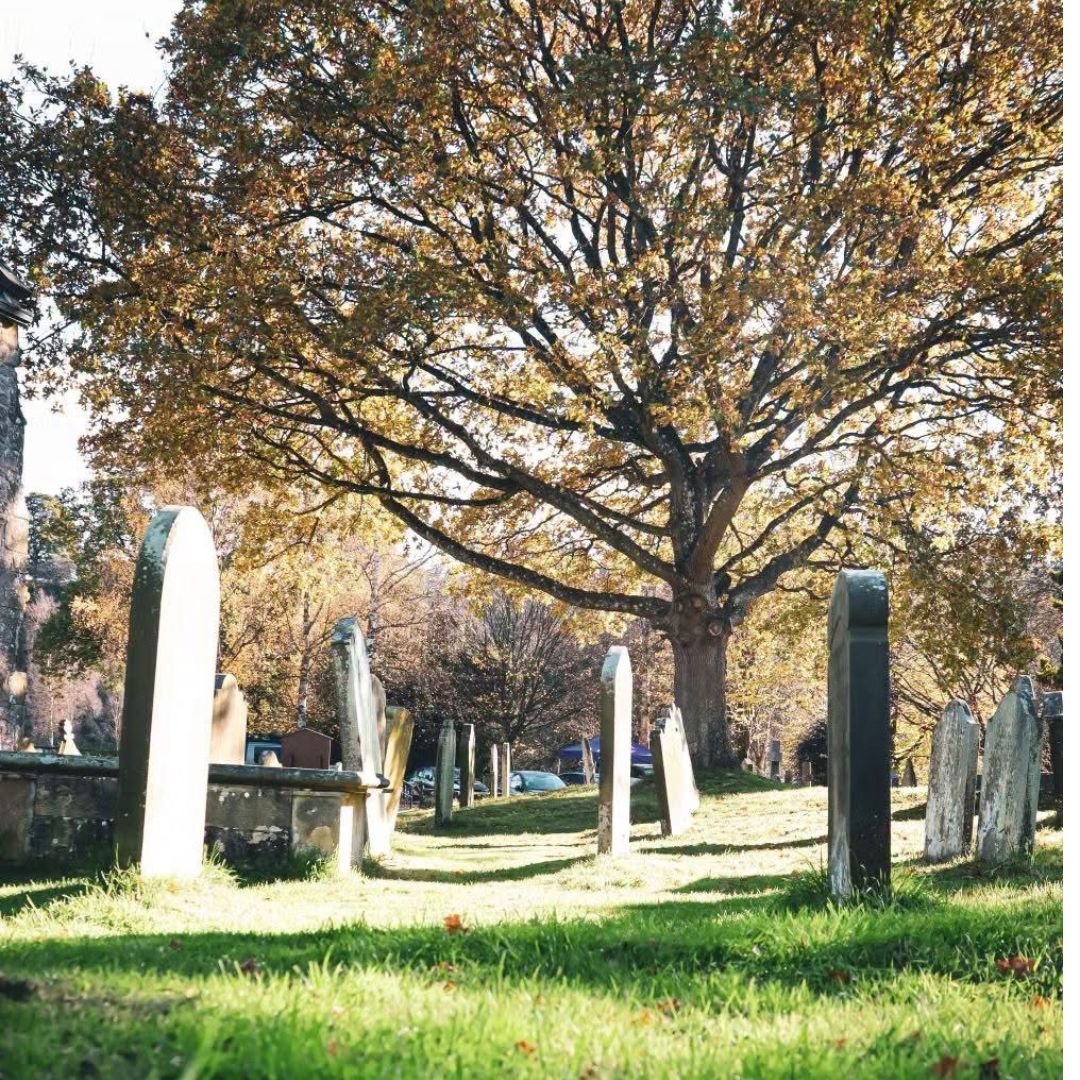
For most of human history death was impossible to ignore. Children watched grandparents die at home. Families washed and prepared the bodies of the people they loved. Coffins sat in the front room before the burial. Funeral processions walked through the middle of town, and cemeteries sat beside the church rather than off on the edge of it. When Jesus arrived at the tomb of Lazarus, he did not stand at a distance while professionals handled the arrangements. He wept with the family, inside the grief itself.
Death was woven into ordinary life, and grief was something you did together, in the room, with your hands.


Today death has been almost entirely outsourced. We call professionals. The body disappears. Hospitals and funeral homes perform nearly every task that families once did themselves, and many children now reach adulthood without ever having seen a
dead body. We have gained real blessings through modern medicine and sanitation, and I do not want to romanticize suffering that has genuinely been reduced. But one unintended consequence is that death has become almost invisible, and invisible things are easy to disbelieve in. Walk into almost any funeral in America and you will hear, regardless of what the deceased actually believed, that they are in a better place now.

Few of us are having our bodies frozen in hope of being revived later, but we are practicing a more sophisticated version of the same denial. We assume good outcomes by default.
We treat mortality as an interruption rather than as the appointment every one of us has already made.
But I think there are actually two denials operating here, and it matters that we name them both. The first is that we deny death is certain. The second, and the more serious one, is that we deny eternity has only two destinations. Increasingly our culture does not simply postpone the thought of death. It has quietly concluded that judgment itself is not really coming, that everyone ends up somewhere fine regardless of what they believed or how they lived. Combine those two denials and you rob the Gospel of its urgency entirely. Why would anyone need to repent today if death is distant and judgment is imaginary? Scripture will not let either denial stand. It is appointed unto men once to die, and after this the judgment. Jesus said plainly that no one comes to the Father except through him. Those two truths together are exactly why Moses prayed for a heart of wisdom rather than a heart of denial.


I grew up closer to this reality than most people I know. My older brother has had more than 40 major surgeries. Along the way, his care put our family in proximity with other young patients, some of whom never made it to middle age. What I absorbed as a child was something that was ordinary for most of human history but has become almost foreign to Americans in my lifetime, the certain knowledge that we would die, and that it might not wait for old age.
I had a friend once who asked me to preach his funeral someday. He did not expect it to come soon. Then he was diagnosed with cancer, and he called me and said, I am going to die. We prayed together, and I told him something that seemed to genuinely surprise him. I am also going to die. He was puzzled at first, and then we talked honestly about the fact that both of us were going to die, and that this was exactly why it mattered so much where we were both headed. He has been cancer free for almost a decade now. He is still going to die. Just not yet. So am I.
Pain has a way of making that conversation possible. American culture will hardly tolerate pain in any form, and I understand the instinct, since nobody wants to suffer. But a culture that numbs every reminder of its own frailty also numbs the very thing God has often used to wake people up. God whispers to us in our pleasures and shouts to us in our pain, and a people who will not sit still long enough to feel the ache of mortality will rarely get around to asking what it means. Telling people the truth about death and about judgment is not unkind. It is one of the most loving things a pastor, or a friend, can do, because the truth is the only thing that actually points anyone toward hope.
Death does not get the final word. Christ has already defeated it. “Where, O death, is your victory. Where, O death, is your sting.”
So let me ask you what I have had to ask myself. If you knew you had one year left, what would you change? What sins would you finally repent of instead of managing?
Which relationships would you repair while there is still time to repair them? Which ambitions would suddenly look as small as they actually are? Moses tells us that the wise man asks those questions long before any doctor hands him a diagnosis.
Numbering our days is not a morbid exercise. It is the only honest path to living in light of eternity, and it is available to you today, not someday.
I am praying for South Carolina and for whoever will serve in that Senate seat in the terms ahead. More than that, I am praying for our country, that we would stop treating death as a rumor and judgment as a myth, and start reckoning honestly with both. Every one of us will stand before a righteous God, most of us far sooner than we assume, and the only hope any of us has in that moment is the mercy and grace purchased by the sacrifice of His Son. That is not a truth to be managed with denial. It is the truth that makes today worth living well.
Clayton Wood is a Knoxville pastor, lawyer and contributing writer for TriStar Daily.