

The law changing teacher sick leave in Tennessee has generated more confusion than controversy. Social media posts and hallway conversations have left some educators wondering whether they have lost days, while others fear the change could quietly reduce benefits they have earned over years of service. Neither concern reflects what the law actually does.
The reality is much less dramatic—and, in many ways, more practical.

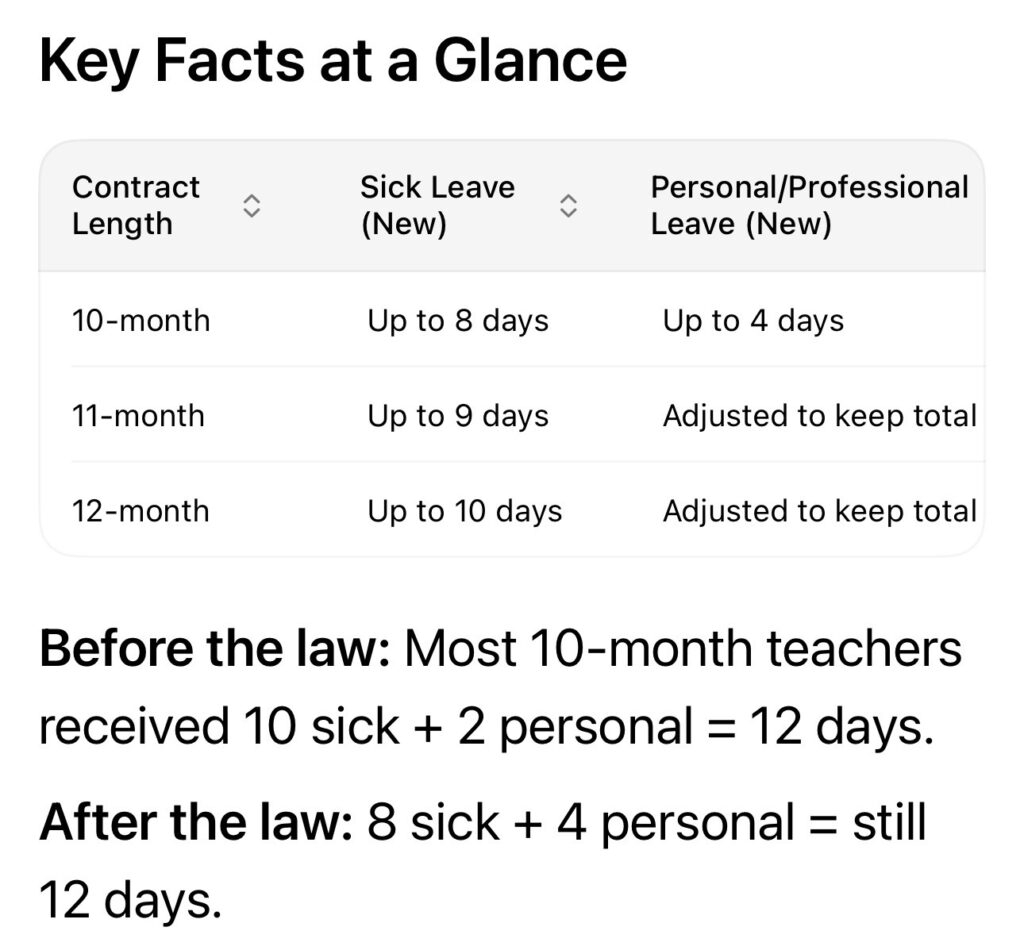
Beginning July 1, 2026, Public Chapter 1022 (HB 2343) does not reduce the total number of leave days teachers receive. Instead, it recognizes something educators have known for years: teachers are people with lives outside the classroom. Sometimes they need time away for reasons that have nothing to do with illness.That is the problem the new law attempts to address.
For decades, many educators faced an uncomfortable choice. They could either postpone important personal or professional obligations or use sick leave when they were perfectly healthy. Neither option served teachers, students, or school districts particularly well.
The new law shifts two annual leave days from the sick leave category into personal and professional leave. The total amount of leave remains unchanged. Retirement protections remain intact because accumulated sick leave continues to count toward retirement service credit. Even better, unused personal and professional leave still converts into accumulated sick leave at the end of the school year.
In other words, teachers are not losing leave. They are gaining flexibility. That distinction matters.


Professional educators juggle far more than lesson plans and grading. They attend college courses, professional conferences, medical appointments for family members, legal obligations, military responsibilities, and countless other events that do not qualify as illnesses but are nevertheless legitimate reasons to be absent.
Good public policy should reflect the realities of the profession rather than force educators into outdated categories.

At the same time, the law wisely preserves safeguards that ensure schools can continue operating effectively. Districts may limit personal leave only under circumstances already established in Tennessee law, including when requests exceed 10 percent of a school’s teachers on the same day, during examination periods, immediately before or after holidays, during required professional development, or on parent-teacher conference days.
Those are reasonable guardrails. Schools still have a responsibility to maintain instructional continuity for students.
Perhaps the most important feature of the legislation has received the least attention. State law establishes minimum benefits—not maximums.


That means local school boards remain free to provide more generous leave policies if they choose. Districts that have negotiated or adopted leave provisions exceeding the state minimum are not required to eliminate those benefits simply because state law has changed.
This point deserves emphasis because much of the current concern stems from implementation rather than legislation.
Some districts previously offered additional leave to veteran educators or had policies developed over many years. As those districts revise their local policies to comply with Public Chapter 1022, they should ensure that no educator is unintentionally disadvantaged. If a teacher with ten or more years of service believes a local policy revision has reduced benefits beyond what state law requires, that issue deserves careful review.
The General Assembly created a floor, not a ceiling. Implementation should reflect both the letter and the spirit of the law.
This episode also reminds us of a broader truth about education policy. Too often, legislation is judged by headlines rather than by the actual statutory language. A rumor that “teachers lost two sick days” spreads much faster than an explanation that two days were simply reclassified while total leave remained unchanged.
Clear communication matters. School districts should update their leave policies promptly, explain the changes clearly, and answer employee questions before misunderstandings become accepted facts. Human resources offices should be prepared to explain both the state requirements and any local provisions that exceed them.
Teachers, in turn, should read their district’s revised policies rather than relying solely on social media or secondhand interpretations.
At its best, Public Chapter 1022 reflects an important principle: professionalism includes trusting educators to responsibly manage a portion of their leave. Giving teachers greater flexibility acknowledges the realities of modern life without diminishing accountability or reducing benefits.
That is not a loss. It is a recognition that supporting educators sometimes means providing options rather than restrictions.
Public education works best when policies are grounded in common sense, implemented thoughtfully, and communicated honestly. Tennessee’s new teacher leave law accomplishes those goals—provided local districts administer it carefully and educators understand what has changed and, just as importantly, what has not.
The bottom line is simple. Tennessee teachers have not lost annual leave. They have gained greater flexibility while preserving retirement protections and maintaining the same total amount of earned time off. That is a policy worth understanding before it is misunderstood.

JC Bowman is the executive director of Professional Educators of Tennessee. He is a Contributing Editor to TriStar Daily