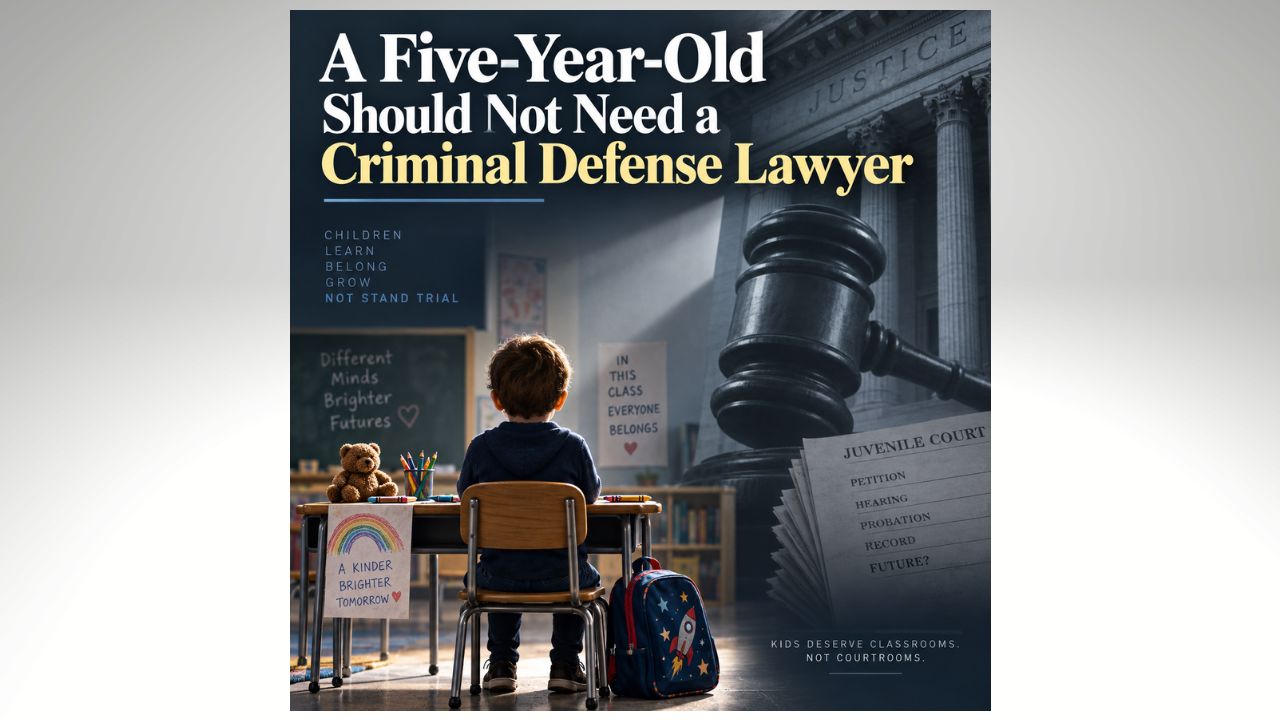

There are moments when common sense should override bureaucracy, anger, and institutional defensiveness. A five-year-old child with autism needing a criminal defense lawyer is one of those moments.
A federal lawsuit against Sumner County Schools in Tennessee and a district administrator raises serious questions about how a young student with significant behavioral needs went from a kindergarten classroom to juvenile court.

The allegations remain allegations. The district and administrator deserve an opportunity to respond, and the courts should determine whether any laws were violated.
But we do not need a federal judge to recognize that something went terribly wrong.
According to WSMV’s reporting on the lawsuit, the child’s parents informed H.B. Williams Elementary School before kindergarten that their son had autism and struggled with emotional regulation. They requested a full-time one-on-one aide and behavioral supports. The lawsuit alleges the district initially declined while gathering its own information.
Then came the crisis.
The child reportedly pushed students and threw objects. Other children were hurt. Their safety matters. So does the safety of the teacher responsible for educating an entire classroom.
We should never minimize that. And we need to look at appropriate placement for chronically disruptive children.
Autism does not mean dangerous behavior must simply be tolerated. A disability is not permission to hurt classmates, disrupt classrooms, or make it impossible for teachers to teach.


But neither should we pretend a five-year-old with autism processes emotions, consequences, and responsibility like an adult—or even an older child.
That is precisely why special education supports exist.
After the incidents, according to the lawsuit, the district agreed to provide an aide. That raises an obvious question: Could earlier intervention have prevented some of what happened?

What happened next is even harder to understand.
A school resource officer sought an aggravated-assault charge. The Sumner County District Attorney’s Office wisely declined to pursue it, according to the lawsuit.
Parents of students in the classroom then pursued juvenile petitions themselves. One eventually dropped the matter. Another parent—who was also an assistant principal in Sumner County Schools—continued his petition.
The case was eventually dismissed after a forensic evaluation found the child was not competent to proceed. Think about that.


We needed a forensic evaluation to establish that a five-year-old child with autism was not competent to stand trial. At some point, adults must be adults.
Parents whose children were injured had every right to be angry and demand action. Teachers have every right to expect safe classrooms. Administrators have a responsibility to maintain order. It is a systemic problem.
But accountability must also be proportional and developmentally appropriate.
There is another reality we cannot ignore.
Finding qualified special education teachers is difficult. Finding educational assistants and paraprofessionals willing to perform demanding work can be equally challenging. Tennessee itself has recognized that special-education staffing shortages are a “complex and widespread concern” and has issued guidance to districts about maintaining services during shortages.
The state’s educator-preparation data also continues to classify special education as a high-demand teaching field. Those shortages are real. But a staffing shortage does not make a child’s needs disappear.
If anything, this case demonstrates why special education recruitment and retention must become a greater priority. We need competitive compensation, better training, manageable workloads, and career pathways that encourage people to enter and remain in special education.
Teachers cannot solve every behavioral problem alone. We need help.
When students with significant behavioral needs are educated in general education classrooms, schools must provide appropriate support. Otherwise, we create an impossible situation: the student struggles, classmates lose instructional time or may be injured, teachers become overwhelmed, and frustrated parents understandably demand action. Everybody loses.
That does not mean every parental request for a particular service must automatically be granted. Special education decisions must be individualized according to a student’s needs.
But bureaucracy—or staffing shortages—cannot become a continual excuse for waiting until a child fails before providing help.
The criminal justice system should never become a preferred substitute for adequate special education services, behavioral intervention, classroom staffing, and sound judgment.
The lawsuit alleges violations of federal disability and constitutional protections. Those questions belong to the courts. The larger question belongs to all of us.
How do we protect every child while ensuring students with disabilities receive the services they need?
Good policy must do both.
Protect the other children. Support the teacher. Recruit and retain special education professionals. Provide appropriate services to the child. Hold adults accountable for making sound decisions.
And remember something that should never require a forensic evaluation to establish: A five-year-old is still a five-year-old.

JC Bowman is the executive director of Professional Educators of Tennessee and a contributing editor to TriStar Daily.