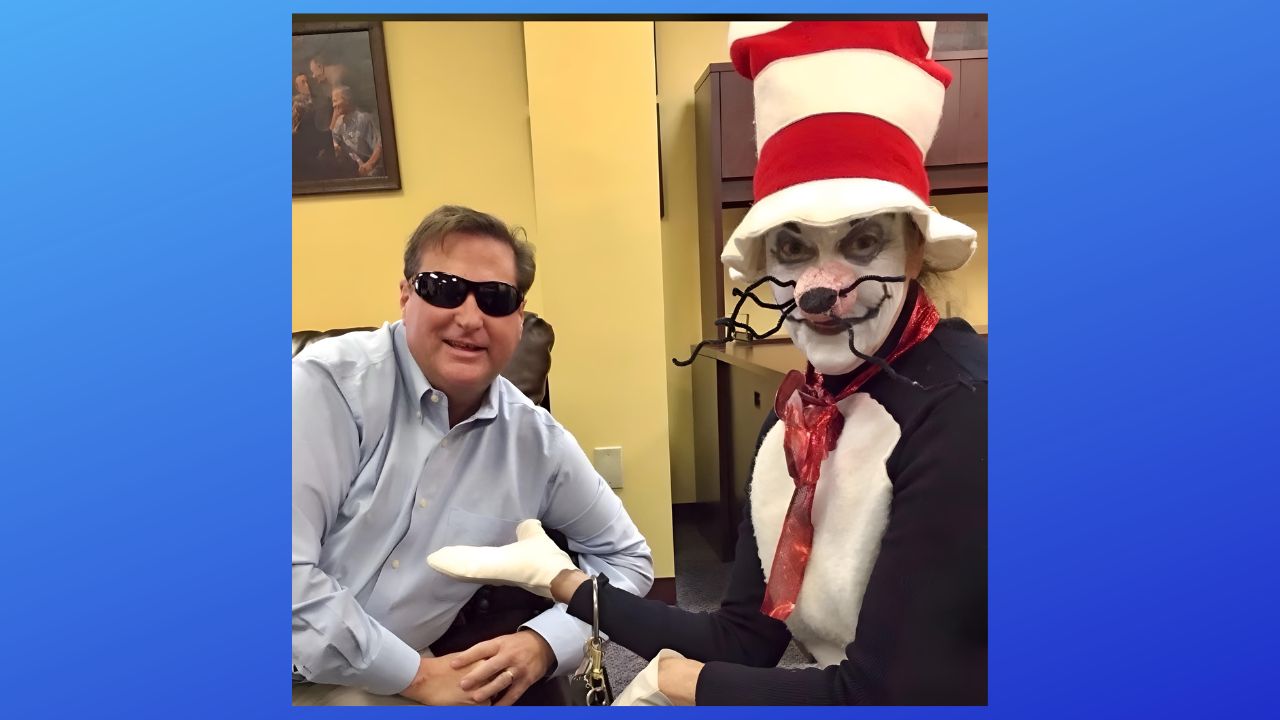

The Cat in the Hat, with his whimsical, mischievous charm, has been hijacked for something far more sinister, and it’s landing teenagers in hot water. What was once a beloved character from Dr. Seuss’s whimsical world is now the poster child for a social media trend that’s more alarming than amusing. We’re talking about AI-generated images and videos of a towering, menacing Cat lurking ominously outside homes and schools, sending shivers down the spines of parents and educators alike.
Initially, this trend seemed like harmless horror-themed fun, perhaps a creative way to spice up the mundane scrolling through TikTok and Snapchat. But as users began attaching these unsettling images to real-life locations and individuals, the lighthearted prank took a dark turn. Some posts even included ominous messages suggesting the Cat was “coming for” specific students, transforming a virtual joke into a potential criminal act.
Law enforcement agencies have largely deemed these posts as hoaxes, devoid of any credible threat. Yet the ripple effect is real. Schools are forced to increase security, classes get disrupted, and police resources are diverted, all because someone thought it would be funny to play digital dress-up with a childhood icon. Authorities have made it clear: claiming a post is “just a joke” won’t protect you from school discipline or legal repercussions.
Take the case of a 14-year-old in Grand Junction, Colorado, who found himself on the wrong side of the law after posting a menacing image linked to a local middle school. Even though the police found no credible threat, the young prankster was charged with harassment. That’s a serious consequence for a moment of misguided humor.
Similarly, in Kentucky, a teen was identified for sending threatening Snapchat messages featuring the eerie Cat imagery. This situation resulted in investigations and heightened security across multiple states.
While the Tennessee Office of Homeland Security is keeping a watchful eye on the trend, they’re urging citizens to preserve evidence rather than repost it. Sharing these posts only amplifies fear and complicates investigations. Remember the “creepy clown” scare of 2016? This trend feels like a sequel, but with today’s AI tools, crafting realistic, fear-inducing images is easier than ever.
Parents and educators need to hammer home a few crucial points:
– Don’t create or share threatening content. It’s not funny; it’s dangerous.
– Preserve evidence. Take screenshots and save account info before reporting anything suspicious.
– Report, don’t repost. Bring any concerning content to the attention of a trusted adult rather than giving it more visibility.
At its core, this trend is a stark reminder that while the Cat may be fictional and the images digitally manipulated, the fear and legal consequences are all too real. A fleeting moment of online “humor” can spiral into a police investigation, school discipline, and potential criminal charges—certainly not the kind of lesson anyone wants to learn.
The Tennessee Office of Homeland Security is smart to be proactive in this situation. As the Cat in the Hat would remind us: “It is fun to have fun But you have to know how.” This isn’t how to have fun.

JC Bowman is the executive director of Professional Educators of Tennessee. He is a contributing editor to TriStar Daily.