
Tennessee lawmakers have long proclaimed that accountability is the cornerstone of education policy. Test the students. Grade the schools A–F. When the numbers fall short, change is expected, right?
However, that standard is not applicable when it comes to the ever expanding voucher program. Academic results and achievement be damned; full speed ahead!
After only four years of Education Savings Account (ESA) results, I.e. the Voucher scheme, the numbers tell a troubling story. Only 17% of ESA students met or exceeded Tennessee’s math proficiency standard this year, while just 24% did so in English. In contrast, public-school students achieved around 40% in math and 42% in English. Simply put, a public-school student was more than twice as likely to be proficient in math.
The disparity isn’t a one off, it is a trend. The Tennessee Comptroller’s three-year evaluation consistently found voucher students lagging behind their public-school peers, exhibiting weaker academic growth as well. The assumption that these students were predominantly fleeing failing schools has also been debunked; many came from schools that were rated average or higher.
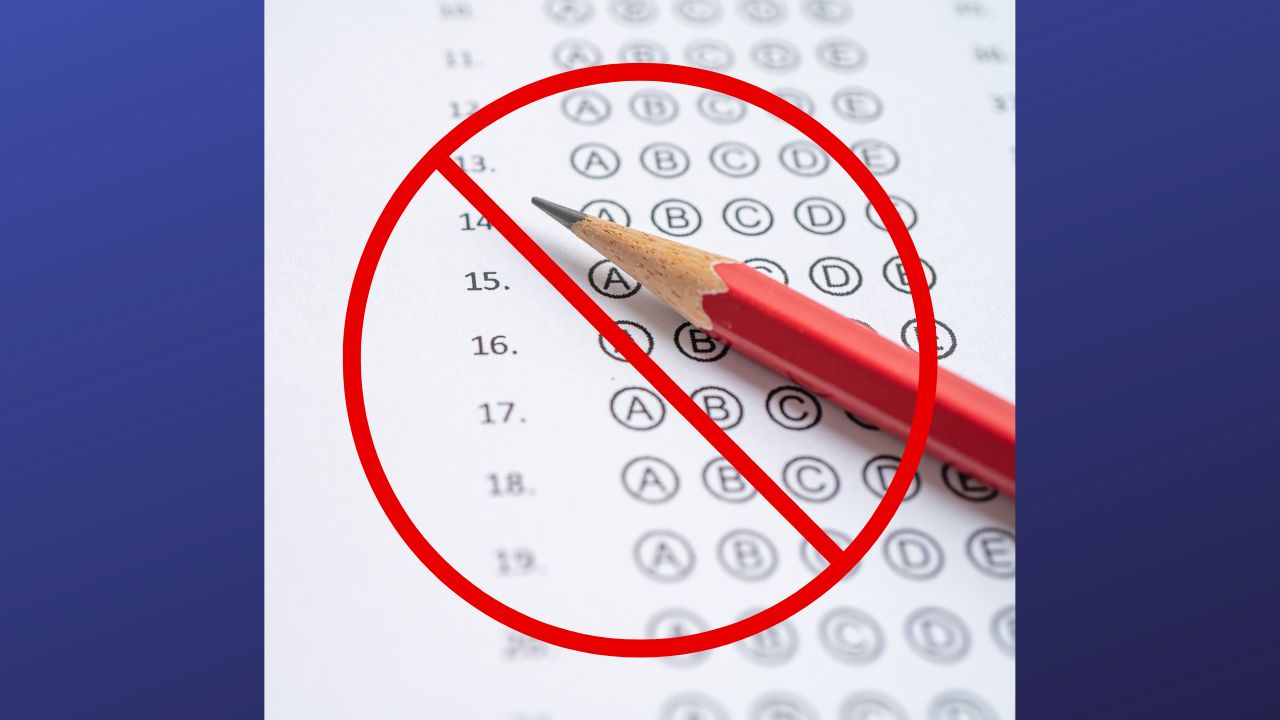
Lawmakers had choices. They could have demanded transparency, enforced stricter standards for schools receiving public funds, or implemented consequences for consistently poor performance. Instead, they opted to adjust the metrics. Don’t like how the game is going? Just change the rules. Test results embarrassing? Stop the testing!!


Until this year, every ESA student in grades 3–11 took the same TCAP tests as public-school students, allowing for a direct comparison. However, with the passage of SB 1585, signed by Governor Lee this spring, private schools in the ESA program can now administer a nationally standardized test aligned with their own curriculum instead of the TCAP. While the state may still sample some students, the universal requirement that allowed for statewide comparisons has been dismantled. This leaves policymakers, parents, and taxpayers in the dark about how their tax dollars are improving education.

Three consecutive years of underwhelming results. A Comptroller’s report documenting the trends. And just as the fourth year of data arrived, the comparison requirement was removed. If voucher students had been excelling compared to public schools, those statistics would be at the forefront of discussions. They are not.
In defense of this shift, it was argued that private schools do not adhere to Tennessee’s standards—a valid point regarding curriculum differences. Yet, this does not justify the double standard.


Tennessee readily employs TCAP and letter grades to evaluate public schools, which entire communities depend on. But when it comes to funneling approximately $10,000 in taxpayer money per student into private schools, suddenly the same test becomes optional and possibly unsuitable.
While multiple measures of success—such as parent satisfaction and school safety—are important, none justify eliminating the singular academic yardstick that enables taxpayers to assess whether their education funding is effective. The state has made the comparison more challenging precisely when the results demand more scrutiny.

Despite this, the program continues to grow. The recently introduced Education Freedom Scholarship program now offers 35,000 scholarships for the 2026-27 school year, supported by around $155 million in new state funding. It is the only education program th state has ever expanded without proven data to show that it works.
Apparently the only “data” that really matters are the millions of dollars poured into Tennessee’s election process by pro-voucher groups like Americans for Prosperity, Tennesseans for Student Success (yes, the name is ironic based on the test scores), and Club for Growth. Those campaign contributions guarantee the expansion of the voucher scheme, despite a complete lack of transparency or academic progress from students getting the taxpayer money.
Public schools remain subject to statewide testing, public report cards, and letter grades, while private schools accepting public funds face little to no accountability. Poor outcomes in public schools serve as justification for vouchers, while poor outcomes in voucher programs lead to changes in how those results are evaluated. This is not accountability; it’s shifting the goalposts.
Taxpayers funding these parallel systems deserve to see comparable results. Tennessee has provided four years of data, and just as those results became increasingly difficult to justify, the ability to compare has been withdrawn.
Consider this: if 60% of voucher students had achieved math proficiency compared to 40% of public-school students, would there still be discussions about whether TCAP was the wrong test? Many already know the answer. So we dump the dismal tests rather than examine and reconsider the program producing those results.
Steve Gill is Editor and Publisher of TriStar Daily.