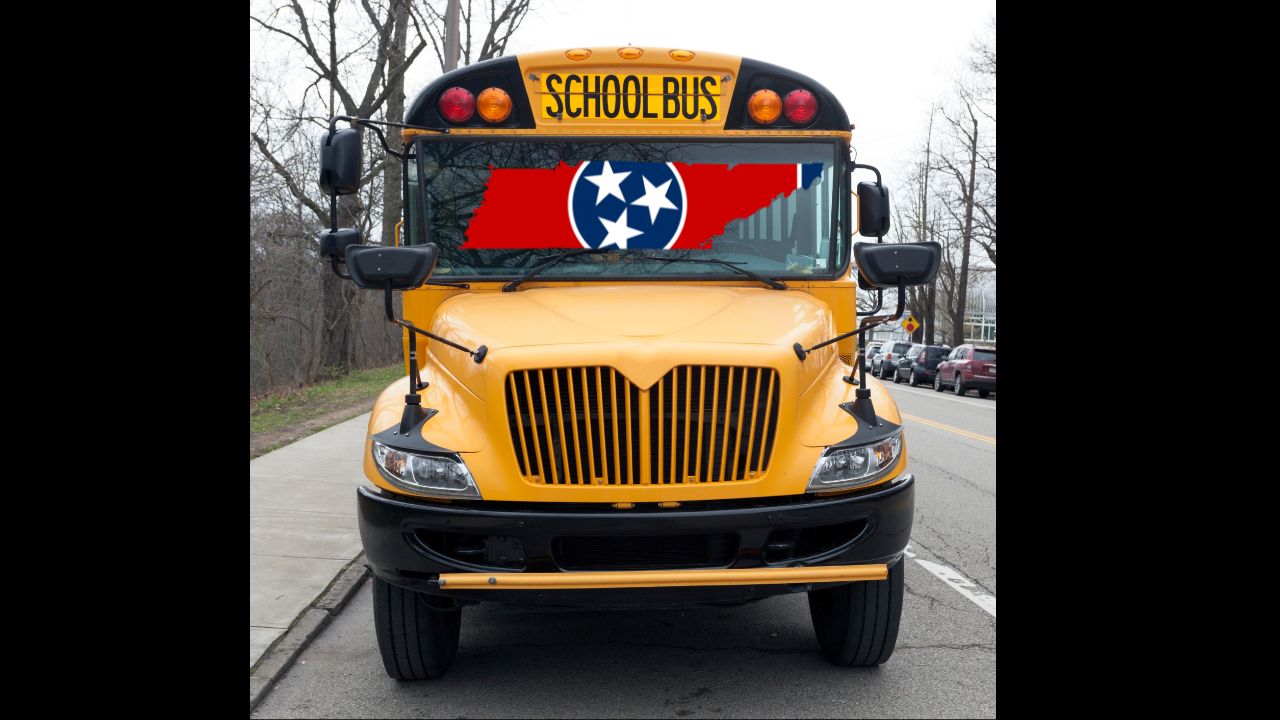

Every school year begins with optimism. New backpacks. New shoes. New teachers. Nervous kindergarteners. Excited parents. Yellow school buses returning to Tennessee roads.
And then there is a danger we too often take for granted. A school bus stops. Red lights flash. The stop arm extends. Children begin moving toward the roadway. And somewhere behind the wheel, an adult decides to keep going. There is no excuse for that.
When a school bus stops and its red lights are flashing with the stop arm extended, drivers must stop. It is the law. More importantly, it is a basic responsibility we owe to children.
We should not need a law to tell us that.
A child stepping off a school bus is not a traffic obstacle. A school zone is not a place to make up two minutes on your commute. A flashing red light is not a suggestion. It is a warning that someone’s child is within feet of moving traffic.
The Tennessee Highway Patrol and local law enforcement will enforce school-zone speed limits and laws prohibiting motorists from illegally passing school buses. Violations can bring substantial fines and points on a driver’s license.
But the real penalty could be much greater. It could be a child who never comes home.
That is why distracted driving around school buses is especially dangerous. Put the cellphone down. Stop texting. Don’t fiddle with the navigation system. Don’t let coffee, breakfast, a conversation or the rush to work take your attention away from the road. A few seconds of distraction can change a family forever.
We also need to understand something adults sometimes forget: children are unpredictable.
A school bus driver can do everything correctly and still cannot control every movement a child makes once that bus door opens. A child may suddenly run toward a parent. Another may chase a backpack. A student may drop a shoe, lunchbox or homework and instinctively turn around to retrieve it.
Children don’t always think like adults. That is precisely why adults must.
Drivers traveling on the same side of the road as a stopped school bus displaying its extended stop arm and flashing red lights must stop.
On a four-lane highway with a continuous center turn lane, drivers on the opposite side generally must stop as well. When opposing traffic is separated by a physical barrier, such as a concrete divider, vehicles approaching from the opposite direction are not required to stop.
The safest rule is simple: If you are uncertain, stop. Losing a few seconds is an inconvenience. Striking a child is a catastrophe.
Students have responsibilities, too.
Children should arrive at the bus stop at least five minutes before their scheduled pickup. They should wait for the driver’s signal and make eye contact with the driver before approaching the bus or crossing the street.
When crossing in front of the bus, students should stay at least 10 feet away from the front—about five giant steps—and make sure the driver can see them. And they should never walk behind the bus.
If a child drops something near the bus, the answer is not to immediately bend down and retrieve it. Tell the driver. Wait for instructions. A backpack can be replaced. A phone can be replaced. A school assignment can be replaced. A child cannot.
Parents should reinforce these rules before the first day of school—not after an accident. Teachers and school administrators should remind students that bus safety does not end when they step off the bus.
Drivers must do their part by slowing down, eliminating distractions and respecting school-zone laws.
Crossing guards deserve our attention and cooperation as well. When they direct traffic, follow their instructions. They are there because children are crossing the road, and their safety depends upon motorists paying attention.
Ultimately, this is not about politics. It is about personal responsibility. Every morning, families place their children on school buses believing they will arrive safely at school. Every afternoon, they expect them to return home. That expectation should never be too much to ask.
We spend considerable time debating how to improve schools, raise academic achievement, recruit teachers and prepare students for the future. Those conversations matter. But none of it matters to a family if their child does not make it safely home.
So as Tennessee begins another school year, let’s make the standard unmistakable: Slow down. Pay attention. Put the phone away. Obey the speed limit. Follow crossing guards. Stop for school buses. Don’t assume the child sees you. Don’t assume there is enough time. And don’t assume it won’t happen to you.
The flashing red lights are there for a reason. Stop means stop.
Because the few seconds you save by ignoring the law could cost a child a lifetime—and a family everything.
JC Bowman is the executive director of Professional Educators of Tennessee