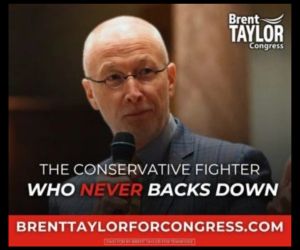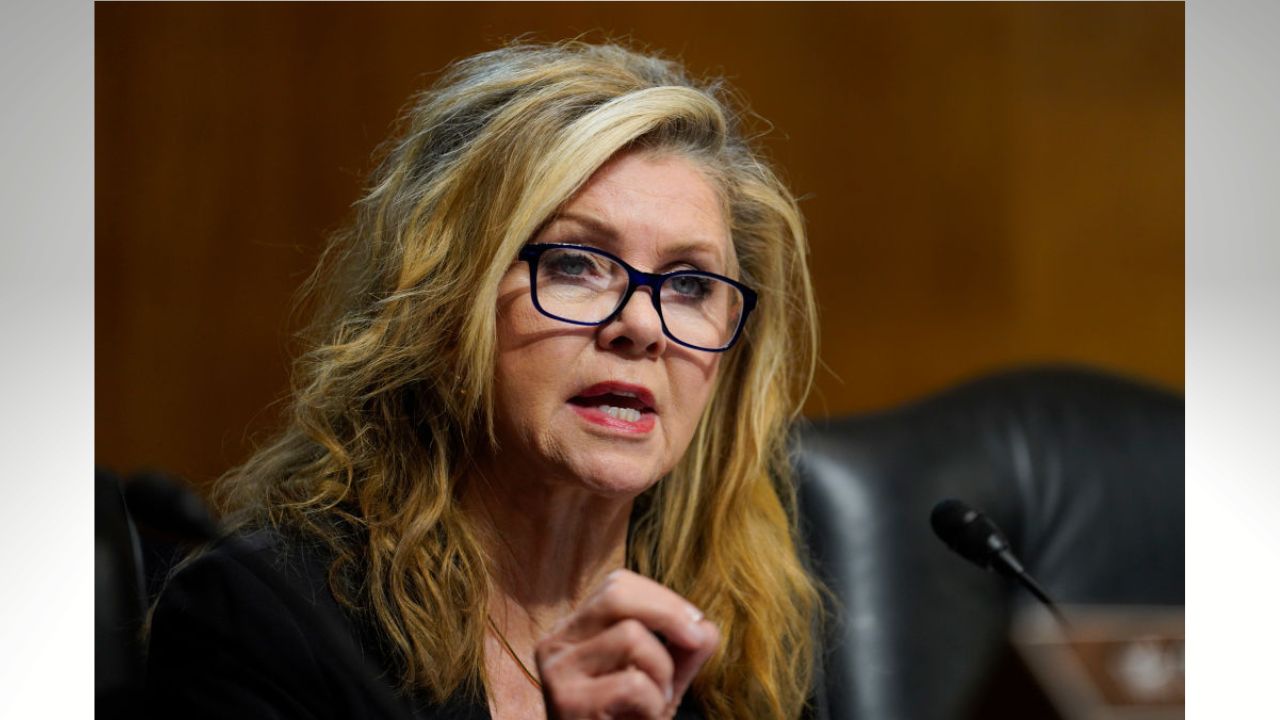

Marsha Blackburn won Tennessee’s Republican gubernatorial primary with 43.6 percent of the vote. John Rose collected 32.9 percent, and Monty Fritts walked away with 23.5 percent. That means 56.4 percent of Republican primary voters preferred somebody else.
Now, I’m no mathematician at MIT, but when more than half the room votes against you, perhaps you should hold off on ordering the coronation robes.
Blackburn won fair and square. Nobody disputes that. But winning a plurality is not the same as inspiring a majority. And pretending otherwise is the kind of political arithmetic that makes Washington budget projections look like an exercise in intellectual honesty.
Of course, combining Rose and Fritts voters into one giant anti-Blackburn coalition is equally ridiculous. These were different candidates with different constituencies. Politics isn’t a smoothie blender. You cannot throw 56 percent of the electorate into a Vitamix and expect ideological consistency to pour out.
Still, the Republican Party has a problem. And the problem did not disappear when the primary ballots were counted. And keep in mind, that in the counties where voters in the Republican Party either knew Rose or knew Fritts she trailed each of them. She carried the counties where they were virtually unknown.
Now Blackburn faces Democrat Jerri Green and independents David Hatley and Lauren Pinkston. Tennessee remains overwhelmingly Republican, so Blackburn enters November as the favorite. But political dominance and political unity are two entirely different animals. Just ask the Roman Empire how that whole permanent-majority business worked out.
The Republican establishment has declared victory. Naturally. Political establishments celebrate themselves with the enthusiasm of Hollywood handing out lifetime achievement awards.
Blackburn has spent decades building her political credentials. She knows the machinery of politics, the donor networks, the consultants, the national organizations, and the people who can turn a campaign into a multimillion-dollar operation.


That machinery works. It also raises legitimate questions.
Approximately 72 percent of Blackburn’s donors reportedly lived outside Tennessee.
National organizations poured resources into the race. There is nothing inherently improper about that. Americans have every right to support candidates beyond their state lines.
But Tennessee isn’t a wholly owned subsidiary of the national political fundraising industry.

The governor works for Tennesseans, not Washington consultants, corporate benefactors, or ideological organizations operating from three states away. When donors and political organizations have interests in education, taxation, regulation, or state spending, voters have every right to ask whether those interests will receive special consideration.
Campaign contributions do not prove corruption. Neither does political agreement. But transparency shouldn’t require a congressional subpoena and a team of forensic accountants.
Then there is Ward Baker, Blackburn’s longtime political consultant. What role might he play in a Blackburn administration? Official adviser? Outside strategist? Political gatekeeper? The fellow holding the clipboard while everybody else waits for permission to enter the room?


Every governor needs trusted advisers. What Tennessee does not need is an unelected shadow cabinet operating somewhere between the governor’s office and the nearest political consulting firm.
But Blackburn’s bigger problem may be the Republicans who believe their own party has stopped listening.
Many Rose supporters will undoubtedly return to the Republican fold. Party loyalty remains powerful, especially in Tennessee. Others may remain suspicious of the establishment. Fritts voters, particularly those animated by constitutional principles and limited government, may prove harder to persuade.
Some will vote for Blackburn. Some may support an independent. Others may simply stay home.
And staying home is the political equivalent of hanging up the telephone without saying goodbye. No protest signs. No dramatic speeches. Just silence where votes used to be.
Hatley and Pinkston offer alternative choices, although neither should assume that disaffected Republicans will automatically embrace them. An independent candidacy requires more than being the available exit ramp from a political traffic jam.
Green faces an even steeper climb. Democrats have struggled statewide for two decades. She must persuade voters who have spent years treating the Democratic label like a warning sticker on a bottle of household chemicals.
And with Justin Pearson on the Democratic ticket, persuading disaffected conservatives to cross party lines becomes an even more complicated proposition.
Still, Blackburn should not mistake the weakness of her opposition for enthusiasm about her candidacy.
That is how political parties become complacent. They confuse winning with governing, fundraising with leadership, and partisan loyalty with public confidence.
Republicans have controlled Tennessee long enough that blaming the other party for every unresolved problem is beginning to sound like a restaurant owner blaming the previous chef after running the kitchen for twenty years.
Public education, infrastructure, economic development, fiscal discipline, and local control deserve serious debate. Voters should hear actual proposals, not another collection of consultant-tested slogans polished until they mean absolutely nothing.
The Republican primary should have been an opportunity to debate those issues. Instead, too much of modern campaigning resembles a televised demolition derby financed by people who will never have to drive on the roads afterward.
Blackburn now has an opportunity to change that.
She can reach out to Rose and Fritts supporters, acknowledge their concerns, and demonstrate that disagreement is not disloyalty. She can explain who will influence her administration, what priorities will guide her decisions, and how she intends to govern for all Tennesseans.
Or she can assume that the Republican label alone will carry her across the finish line.
It probably will.
But that is precisely the danger.
A party can win elections while gradually losing the confidence of its own voters. It can dominate the legislature, occupy the governor’s mansion, and control the political conversation while becoming increasingly disconnected from the people who put it there.
Eventually, those voters stop applauding. Some stop participating. Others start looking for alternatives.
November may not produce a political earthquake in Tennessee. Blackburn remains the favorite. But the election will tell us something about the Republican coalition: whether its divisions are temporary disagreements or symptoms of a deeper fracture.
Winning the nomination gave Blackburn the Republican ballot line. It did not give her ownership of Republican voters.
Those votes must still be earned. And threats and bullying are not the best path to unity.
And if the political establishment cannot understand the difference, perhaps it should spend less time counting campaign contributions and more time counting the people quietly walking toward the exits. Republicans regularly criticize Democrats for placing party over policy, putting political fealty ahead of country. If Republicans do the same thing, is there really any difference?