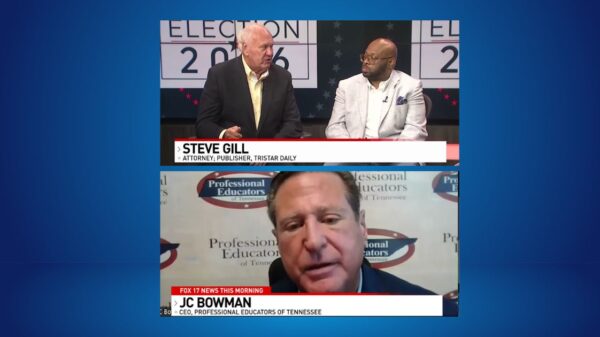

By: Steve Gill and J.C. Bowman
Tennessee has developed a curious definition of fiscal conservatism. We subsidize private-school tuition — including Muslim schools, yet struggle to sustain the schools that educate most of our children, and watch communities debate which neighborhood school must close next. Then we congratulate ourselves for advancing “educational freedom.”
Freedom for whom? And at whose expense?
As conservatives, we believe in parental rights, educational opportunity, limited government, and fiscal responsibility. None of those principles requires taxpayers to write an ever-growing check for private-school tuition. Yet that is precisely the direction Tennessee is heading and will likely continue.
The problem is not school choice. The problem is a political establishment increasingly unwilling to distinguish choice from subsidy, investment from expenditure, or conservative principle from partisan obedience.
Consider the numbers. According to the U.S. Census Bureau’s 2024 Annual Survey of School System Finances, Tennessee ranked eighth-lowest among states in current public-school spending per pupil. The measure covers day-to-day educational operations, excluding construction and debt service, and does not adjust for regional costs. Nevertheless, Tennessee remains among the nation’s lowest-spending states by this and other measures. At the same time, Tennessee rose from 42nd in 2003 to 16th in 2024, the biggest gain of any state in NAEP Scores.
Meanwhile, Tennessee made 35,000 Education Freedom Scholarships available for 2026–27, each worth $7,530. At full utilization, that represents approximately $264 million in annual scholarship awards. That is not pocket change. It is a substantial recurring commitment of taxpayer money. And it has a built in growth mechanism every year.
Voucher supporters correctly note that these scholarships do not directly subtract dollars from a school district’s Tennessee Investment in Student Achievement allocation. That is a fair point. However, another conservative principle to remember is that state resources are finite. Money committed to one program cannot simultaneously be spent addressing another priority.
Tennessee reports that most new scholarship recipients qualified under income-based or existing scholarship-program criteria. But broad eligibility categories do not tell taxpayers how benefits are distributed across actual household incomes. Before further expansion, lawmakers should publish a detailed accounting of recipients’ income levels, previous school enrollment, and academic outcomes. Eligibility is not the same thing as demonstrated need.
Political action committees and out-of-state advocacy organizations have invested heavily in advancing Tennessee’s voucher agenda. They have every right to participate in the political process. But political advertising, campaign contributions, and legislative influence cannot substitute for evidence that a policy works.
The state’s own research raises legitimate questions. In the older, geographically limited Education Savings Account program, the Tennessee Comptroller found that only 28 percent of participating students in 2024–25 had attended public school the previous year. Sixty-five percent had not completed the previous year in public school. Academic growth among ESA students generally lagged that of public-school students taking the same assessments.
These findings do not establish the outcomes of the newer statewide scholarship program. They do establish why lawmakers should demand stronger evidence before expanding public subsidies.
Now consider TISA. Passed in 2022, and implemented in 2023–24, Tennessee’s student-based funding formula represented a potential improvement over the previous Basic Education Program. The state invested an additional $1.16 billion in its first year, and every locally administered district received more state formula funding. That deserves recognition. But increased funding does not eliminate structural weaknesses.
TISA follows students. School operating costs do not always follow them. A rural district losing enrollment cannot simply eliminate half a bus route, half a school roof, or half a chemistry teacher. Buildings, transportation, utilities, and special education obligations remain even when student counts decline.
The 2026 TISA Review Committee recognized unresolved needs, recommending additional attention to infrastructure, mental-health services, economically disadvantaged students, and smaller districts.
Meanwhile, temporary BEP transition funding ends after 2026–27. Other funding protections remain, but they cannot magically erase years of enrollment decline or rising operating costs.
That brings us to school closures. Memphis-Shelby County Schools approved five closures ahead of the 2026–27 school year, with a broader facilities plan contemplating as many as 15 by 2028. Knox County has confronted budget pressures and discussions about consolidating schools. Other communities, like Cannon County, faced similar decisions, in fact, we have closed 159 schools since 2019.
Sometimes consolidation is necessary. Our birthrate is declining. Taxpayers should not be expected to maintain half-empty buildings indefinitely. But closing a school is not a simple accounting exercise.
Transportation costs rise. Students are displaced. Educators face uncertainty. Communities lose institutions that may have anchored neighborhoods for generations.
Before any closure, school boards should publish the projected savings, transition expenses, enrollment assumptions, and educational consequences. A year later, they should report whether those projections proved accurate.
And state policymakers should be held to an equally demanding standard. Voters are beginning to speak at the ballot box and state leaders better notice.
Here is the contradiction Tennessee policymakers must confront: We demand detailed accountability from public schools while expanding private-school subsidies under a different and less comparable system of academic reporting. We celebrate educational freedom while rural families may have no practical private-school alternative. We praise local control while state policy increasingly determines the financial circumstances under which local boards must operate.
None of this means private schools unnecessary. They are very much needed. A rising debate about Muslim schools in state voucher programs highlights a central issue with public funding for religious instruction, particularly when linked to radical Islamic teaching. Private schools serve important purposes and deserve the freedom to pursue their distinctive missions. Nor does it mean public schools should be immune from criticism, competition, or necessary consolidation. It means public money requires public accountability.
Tennessee’s voucher programs, TISA formula, and school closures cannot be treated as unrelated debates. Together, they reveal the state’s educational priorities, its fiscal choices, and the consequences for families who cannot simply enroll somewhere else.
Conservatives across Tennessee should be especially concerned. Conservatism is not a loyalty oath to legislation bearing a Republican sponsor. It is a commitment to principles that remain valid even when our own political leaders find them inconvenient.
Before expanding vouchers again, lawmakers should demonstrate measurable academic benefits, disclose who receives the subsidies, assess long-term fiscal obligations, and explain how rural students benefit. They should address TISA’s remaining weaknesses and require transparent financial and educational plans before schools close.
Tennessee does not suffer from a shortage of political slogans. It suffers when slogans replace scrutiny. When policies get slammed through the General Assembly without any real discussion: taxpayers lose
Calling a government subsidy freedom does not make it fiscally conservative. Calling a funding formula an investment does not guarantee its adequacy. And calling a school closure efficiency does not prove that children or taxpayers are better served.
The test of public policy is not what politicians in Nashville call it. It is what taxpayers pay for, what students receive, and who is held accountable when the promises fail.
Steve Gill is the editor and publisher of TriStar Daily. JC Bowman is the executive director of Professional Educators of Tennessee.