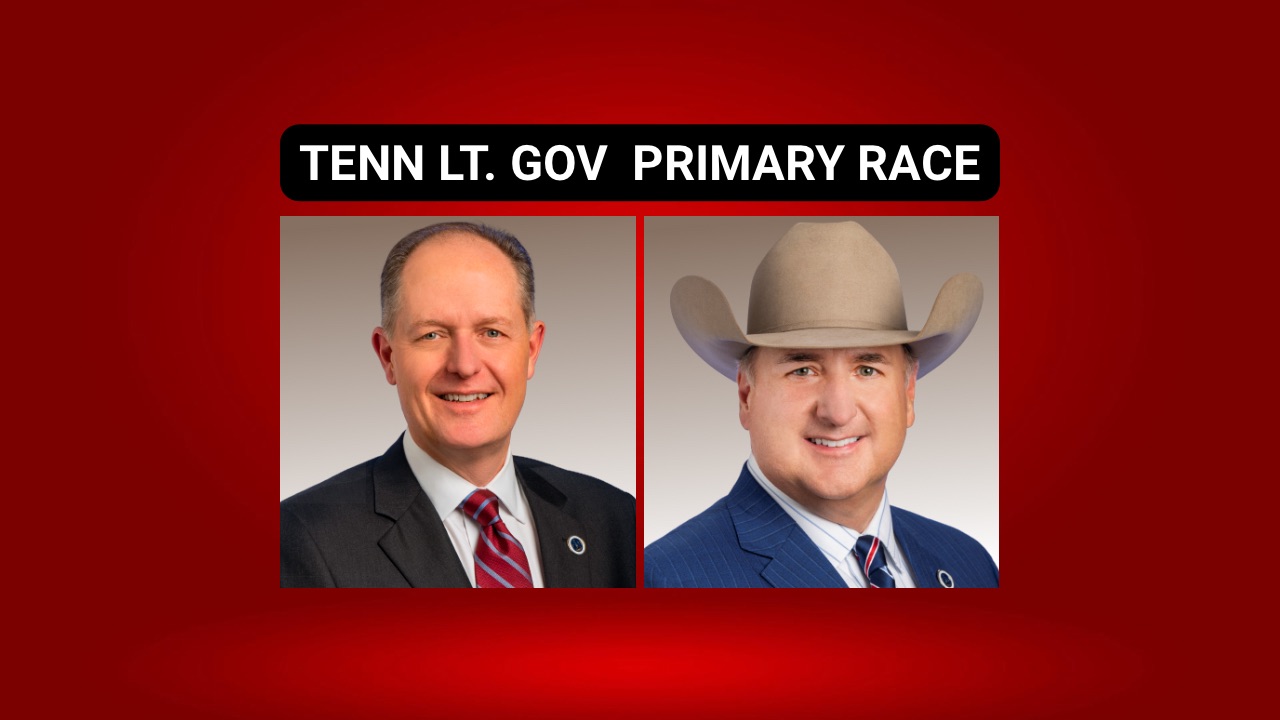

As all political eyes in Tennessee are directed at the Republican primary for Governor, which is tantamount to victory in November, few are thinking about who replaces Lt. Governor Randy McNally in January. That process is somewhat complicated and will likely be determined by math, timelines and possibly geography.
Lt. Governor NcNally, who holds that position by virtue of being elected Speaker of the Senate by his colleagues, announced earlier this year that he would not seek reelection.
Maneuvering to fill his spot had already quietly begun over the last several years between those anxious to assume the position when he, at some point, stepped aside.

The race to fill McNally’s Senate seat immediately drew interest from two former House members, Stacey Campfield and Jimmy Matlock. Campfield soon yielded to Matlock who is assured of winning in November.


But the real fight will be who replaces McNally as Lt Governor. Republicans currently hold a 27-6 supermajority in the Senate. That number is unlikely change following the November general election. It may change briefly if State Senator Brent Taylor, from Shelby County, wins his ninth congressional district race.

If Taylor is elected to Congress, as most political analysts expect will happen, he will resign his state Senate position sometime after the November election. At that point, the Shelby County commission will select a replacement pending a special election to fill the nearly 4 year balance of the Senate term that he will have just secured. The Shelby County commission is majority democrat, and almost certainly will select a Democrat to fill that slot temporarily, most likely from their own midst. That democrat will face the winner of the Republican primary in the special election, in a strongly republican district. Thus, sooner rather than later, Republicans will return to their 27 to 6 supermajority majority in the state Senate.


What is the timeline for a Taylor resignation and how could that impact the election of a new Lt Governor? Under Tennessee law, legislators are deemed elected as soon as the general election is over. They will be sworn in in January, but once they are elected, they are considered “elected.” Therefore, Taylor does not have to wait until January when senators are sworn in to be able to resign his new Senate term and trigger a special election.
Many political observers expect Taylor, again, assuming he wins his primary this week and is elected to Congress in November, to resign sometime in November in order to expedite a special election to take place early in the 2027 legislative session.
So, how does this impact the Lt Governor race? The Republican caucus is scheduled to meet on the morning of Tuesday, November 10 to elect their nominees for leadership in the upcoming session. By simple majority vote of the caucus they will select a Lt. Governor, Majority Leader, Caucus Chair and other leadership positions. The votes are by secret ballot. If there are more than two nominees for a position, the candidates will be whittled down by votes until two remain. At that point the magic number of 14, representing just over half of the 27 member caucus, is the number needed to win. (Somebody is likely to have to write 14 thank you notes for the 13 or 12 votes they get based upon the solid “commitments” they had going into the final vote.) Taylor is not likely to be a member of the state Senate when the votes are formally taken in January, but the Republican super majority will back the caucus nominee for Lt. Governor.
Behind the scenes negotiation for those votes by the candidates for Lt Governor, which currently include Jack Johnson, Paul Bailey and Bo Watson, will involve committee assignments and chairmanship and other perks of power. While, millions of Tennessean will vote for Governor, the votes of 14 will determine who holds the vitally important Lt Governor’s office.
Geography could play a role. If Marsha Blackburn is elected Governor, there are some who believe the Senate will be reluctant to elect Jack Johnson from Williamson County because it would give too much power to that one county out of 95 across the State of Tennessee. Blackburn, like current Governor Bill Lee, is from Williamson County. If Paul Bailey secures the position, he and House Speaker Cameron Sexton would both be from the upper Cumberland. Geographic distribution of the positions may be a topic of discussion among the Senators, but will it actually sway votes?
This week, all eyes are on the Republican primary for Governor. But astute political observers, like us, are already looking ahead to the next big political battle looming in Tennessee, even if it’s being conducted largely in the shadows at this point.