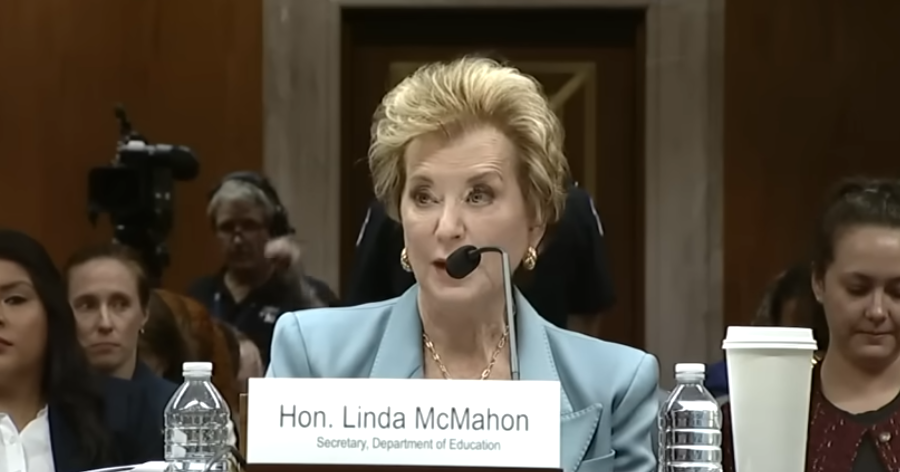

The Trump administration’s FY 2027 education budget proposal sends a clear message: Washington seeks less control, fewer programs, and a notably smaller federal role in education. That has been the mission of the Trump administration. Education Secretary Linda McMahon’s testimony before the Senate Appropriations Subcommittee highlighted a sharp philosophical divide.
The administration argues that cutting billions from the U.S. Department of Education will boost efficiency, empower states, and shift spending toward outcomes rather than bureaucracy. Critics, however, see a different picture—a retreat from federal responsibility that could harm vulnerable students.
This debate isn’t just about budget numbers; it’s about national priorities.
The proposed elimination of TRIO programs, which have long helped low-income and first-generation students access higher education, raises serious concerns. These programs have been crucial pathways for students lacking the resources and guidance needed to pursue college opportunities.


Similarly, proposed consolidations and cuts impacting rural schools, special education, and K-12 grants create uncertainty for communities already working to meet the needs of disadvantaged students.

The administration’s broader effort to reduce the Department of Education reflects a long-standing belief that states and local communities are better suited to make educational decisions.


While returning authority to states may promote flexibility and innovation, it also risks widening disparities between well-funded and under-resourced schools if not carefully managed.
Civil rights enforcement also emerged as a key concern. Staffing cuts in the Office for Civil Rights have raised questions about whether student protections can be effectively maintained. Promises of future adjustments may not be enough to reassure families relying on strong federal oversight.
Notably, this hearing revealed bipartisan concern. Several Republicans voiced reservations about cutting programs with proven track records or reducing support in ways that could harm their constituents.
The core issue is not whether government can operate more efficiently—it should. The real challenge is ensuring that efficiency does not serve as a pretext for abandoning essential commitments to educational opportunities. Congress now faces the tough task of deciding whether this proposal constitutes meaningful reform or excessive retrenchment.
Local control, fiscal responsibility, and streamlined government are vital goals. However, these must be balanced with an unwavering commitment to ensuring all students—regardless of income, location, or circumstance—have access to quality education.
America’s future will depend not solely on federal cuts, but on whether every child continues to have a fair chance to succeed. We need to watch this debate closely in Tennessee.
JCBowman is the executive director of Professional Educators of Tennessee and Contributing Editor for TriStar Daily.