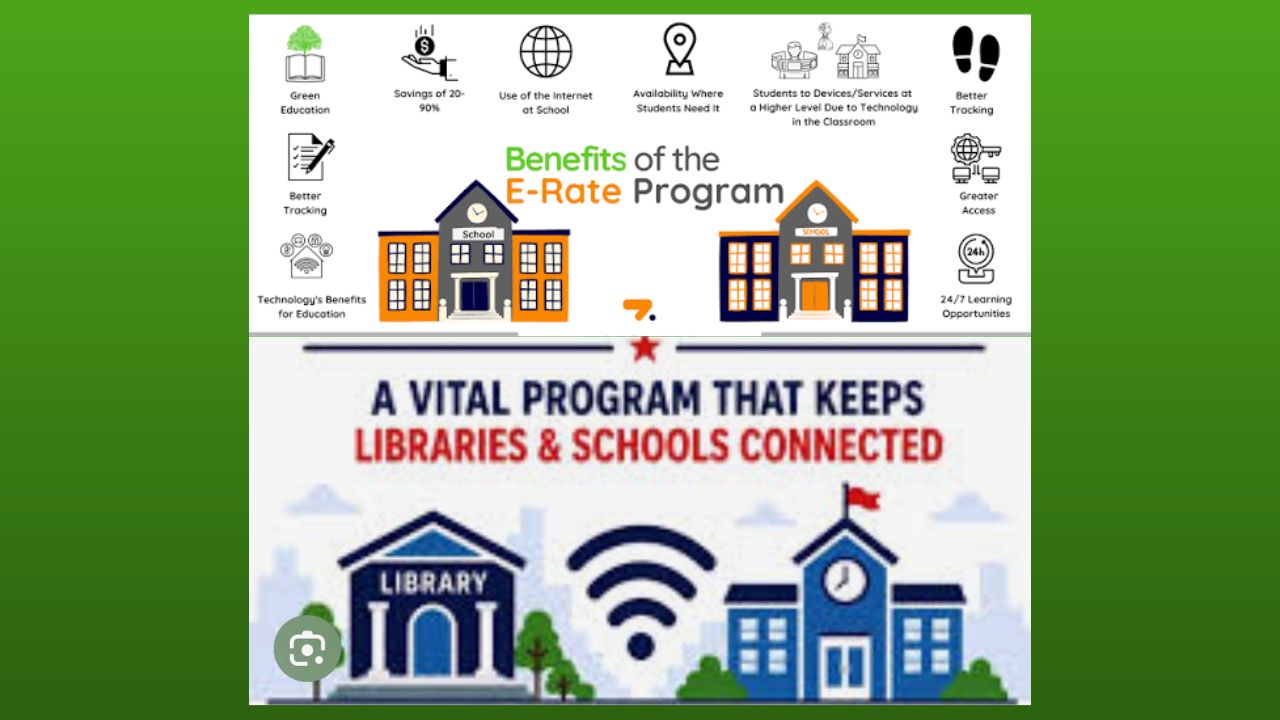

On June 25, 2026, the Federal Communications Commission voted 2–1 to launch a “top-to-bottom” review of the E-Rate program, the federal program that has helped Tennessee schools and libraries connect students and communities to the internet for nearly three decades.
The FCC published its proposed rules in the Federal Register on August 14. Public comments are due October 13, with reply comments due November 12. The vote did not cut funding. However, the questions raised—including whether E-Rate has fulfilled its mission and whether the program should be limited or even sunset—deserve serious discussion, especially in Tennessee. Our state has greatly benefited from the program.
Congress created E-Rate through the Telecommunications Act of 1996 and implemented it starting in 1997 to address a simple problem: too many schools and libraries lacked reliable access to advanced telecommunications and the internet. Tennessee
For low-income and rural communities, E-Rate has become a practical lifeline. The program provides discounts, typically ranging from 20% to 90%, based on poverty and rural status. These discounts help make broadband connections, internal networking, and eligible equipment financially feasible.
The E-Rate program has connected over 100,000 schools and about 11,000 libraries nationwide. For nearly 30 years, it has effectively supported education technology, but it should still be subject to scrutiny.
The FCC should investigate administration, waste, fraud, and abuse. A review of pandemic-era flexibility is necessary. Implementing better data collection, clearer compliance guidance, stronger procurement standards, and tighter oversight are all reasonable reforms. However, this discussion extends well beyond simple housekeeping.


When the Commission asks whether E-Rate has fulfilled its mission—or whether the program should be geographically limited or phased out—we should be cautious about relying on statewide or national averages.
According to Linda Jacobson, the Government Accountability Office recently highlighted that E-Rate is distinctive among five government programs. It is the only program that adheres to all nine recommended practices aimed at preventing fraud, waste, and abuse.

Tennessee’s broadband statistics are encouraging, yet they mask significant disparities among rural counties, high-poverty communities, and urban neighborhoods. Connectivity is not simply a matter of whether a building has internet access. It also involves capacity, reliability, infrastructure, and the ability to support the growing demands placed on schools and libraries.
For a district operating on a tight budget, those costs matter. Reducing E-Rate support could force schools and libraries to make difficult choices: reduce bandwidth, postpone network upgrades, delay equipment replacement, scale back cybersecurity investments, or redirect funds from other priorities.


For school systems already managing staffing, transportation, facility and instructional costs, those choices could come directly at the expense of students.
The less visible benefits of E-Rate matter, too. Reliable broadband and internal networks support standardized testing, digital curriculum, online instructional resources, college and job applications, remote learning, and public library services.
A library may be where a Tennessean completes a job application, accesses government services, participates in online training, or develops essential digital skills. These are not luxuries. They are now a part of modern life.
There is also an important legal and institutional principle: Congress created the E-Rate program. Any effort to fundamentally repurpose or eliminate the program should be grounded in clear statutory authority and strong evidence, and, where appropriate, involve Congress. The FCC has authority, but it also has limits. So, what should Tennessee do?
First, participate in the process. The FCC docket, WC Docket No. 26-133, is open for public comment. Superintendents, school board members, library directors, educators, parents, students, and community leaders should make their voices heard.
But don’t simply submit opinions. Submit evidence. Document bandwidth needs. Explain network replacement costs. Identify the populations served. Show what E-Rate dollars accomplish locally. Anecdotes are powerful. Anecdotes backed by evidence are even stronger.
Second, advocate for reform—not reflexive repeal. If the administration needs improvement, fix it. If procurement rules need strengthening, strengthen them. If waste exists, eliminate it. If data collection is inadequate, improve it. Accountability and access are not competing values. We can demand both.
Finally, Tennessee’s congressional delegation should be engaged. Changes of this magnitude deserve congressional attention. Lawmakers should insist that any reorientation of E-Rate protect students and library patrons who depend upon reliable connectivity and that decisions be based on localized evidence rather than broad national averages.
The E-Rate debate is important. It affects communities that are still working on their digital skills. This discussion is about whether rural and low-income schools have the resources they need to succeed in today’s economy. Ultimately, it is about opportunity. Tennessee has made tremendous progress, but that progress does not mean every community has reached the same destination.
Reform what needs reforming. Eliminate waste. Demand accountability. Protect taxpayer dollars.
But before we disconnect the lifeline, let’s make certain everyone is actually connected. Our citizens and students deserve nothing less.
Kevin Raper, the representative for the 24th District, serves as the vice-chair of K-12 Education. JC Bowman is the executive director of the Professional Educators of Tennessee.