In an age where entertainment, information, and connectivity are just a fingertip away, we navigate a digital landscape that looks less like a playground and more like a minefield. Sure, kids are glued to their devices—smartphones, tablets, and the ever-popular Chromebook—but what happens when the shiny allure of technology starts to crumble under the weight of reality?
Let’s break it down: children today are logging 5 to 7 hours of daily screen time, exceeding recommended limits. This isn’t just a casual Netflix binge; it’s a formula for disaster. Experts warn that excessive exposure is linked to rising rates of obesity, sleep disorders, anxiety, and even social development issues. In a twist of irony, while we rush to hand our kids the latest gadgets, we might be short-circuiting their childhoods.
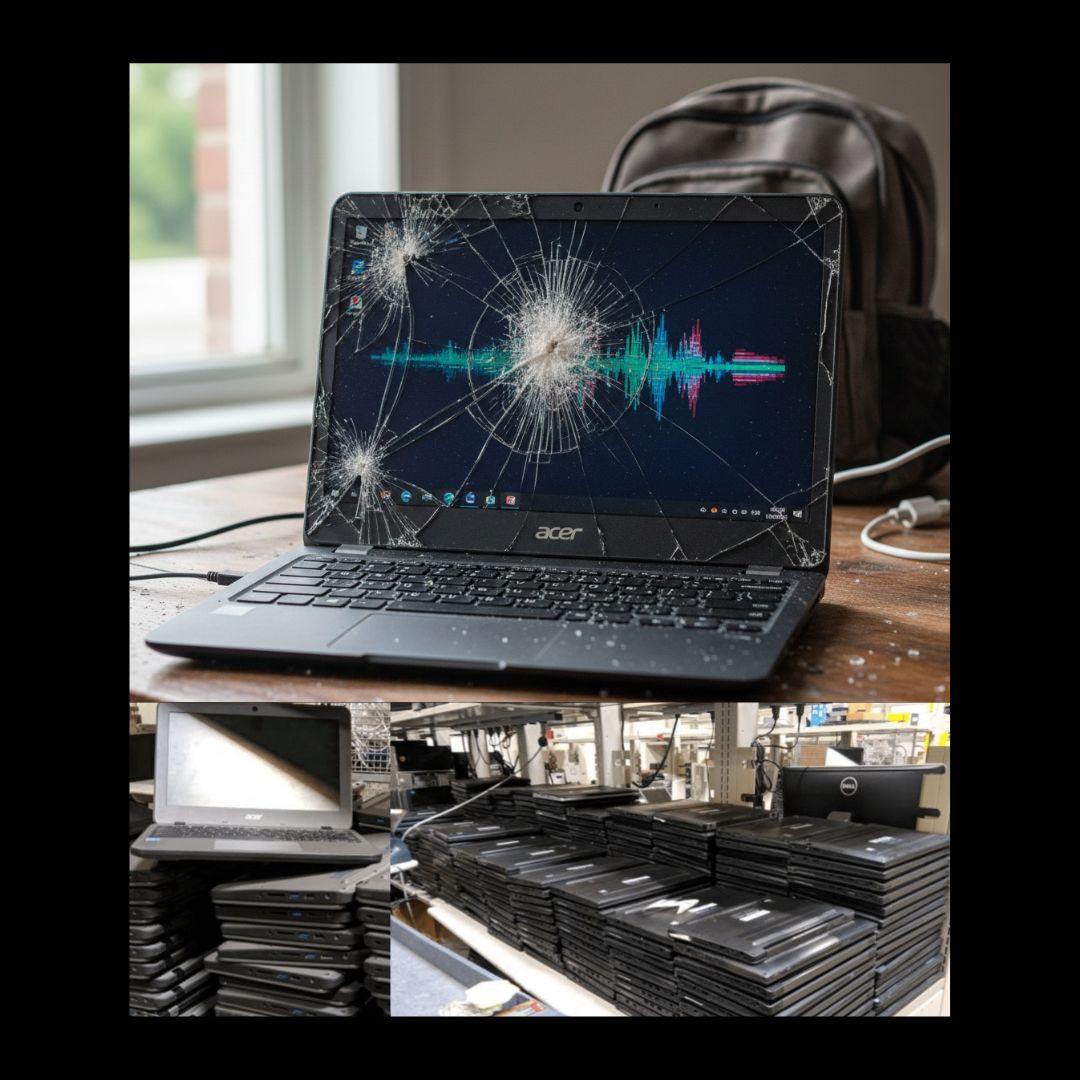
Enter the Chromebook, the laptop that schools embraced like a long-lost relative at a family reunion. Thanks to the pandemic, school districts scrambled to provide every student with their own device. In 2020, Chromebook sales skyrocketed by 287% over the previous year. However, fast-forward to today, and we’re witnessing a sad tale of tech disposability, according to research.
These laptops aren’t just temperamental; they come with built-in “death dates.” Imagine buying a used car only to discover it has an expiration date—one that isn’t tied to when you bought it. Schools are now grappling with expired devices that can no longer receive updates or access essential online resources, leaving students and teachers in a technological lurch. Then they have to replace them.
We can’t ignore the elephant in the room: the environmental impact. Manufacturing laptops consumes staggering resources and emits greenhouse gases comparable to those of the airline industry. The 31 million Chromebooks sold during the pandemic are estimated to have emitted approximately 8.9 million tons of CO2e. Recycling efforts are abysmal; only one-third of e-waste is properly processed. This isn’t just a tech issue—it’s an issue waiting for Al Gore to write a book about.
Why do Chromebooks fail so spectacularly? Here are some head-scratchers:
- Built-in Expiration: Chromebooks have a predetermined lifespan dictated by software support. Once they reach this date, they’re effectively useless, even if they’re still physically intact.
- Spare Parts Shortage: Finding replacement parts is like hunting for unicorns. Manufacturers don’t prioritize support, leaving schools scrambling for expensive third-party solutions.
- Frustrating Design Choices: Instead of using standardized parts, manufacturers create models that change just enough to render previous parts obsolete. Thanks, but no thanks.
If you are committed to equipping every student with a laptop, they should be built to endure the rigors of school life. Google, or any laptop manufacturer, has the power to set the bar higher. They could extend the software lifespan and increase the automatic update expiration to 10 years. If we can keep a smartphone running for a decade, why not a Chromebook? We should support repairability in our school policies and state laws so that manufacturers must produce spare parts and create standardized designs that promote repair and reuse.
Our society is drowning in disposable technology that leads to mountains of waste. The consequences of this practice are dire, with e-waste causing over 70% of the environmental damage associated with the waste stream.
As we integrate more technology into our classrooms, we should be teaching our children about sustainability, not just how to scroll through TikTok. If Google wants to be the provider of choice for hundreds of millions of laptops, it needs to get it right.


Technology should be used thoughtfully in the classroom to enhance engagement, personalize learning, improve accessibility, and manage distractions. When used as a tool rather than a substitute for teaching, technology provides interactive experiences, immediate feedback, and access to extensive resources, making learning more dynamic and inclusive. Technology does not replace teaching; it aids instruction. We need to keep this in mind at all times.
So, while we’re busy swiping on our devices, let’s remember that sometimes, it’s worth putting them down and having a real conversation about what we want for our kids. After all, the next generation deserves more than just another shiny gadget; they deserve technology that lasts.
JC Bowman is the executive director of Professional Educators of Tennessee. He is the contributing editor to TriStar Daily.
Author