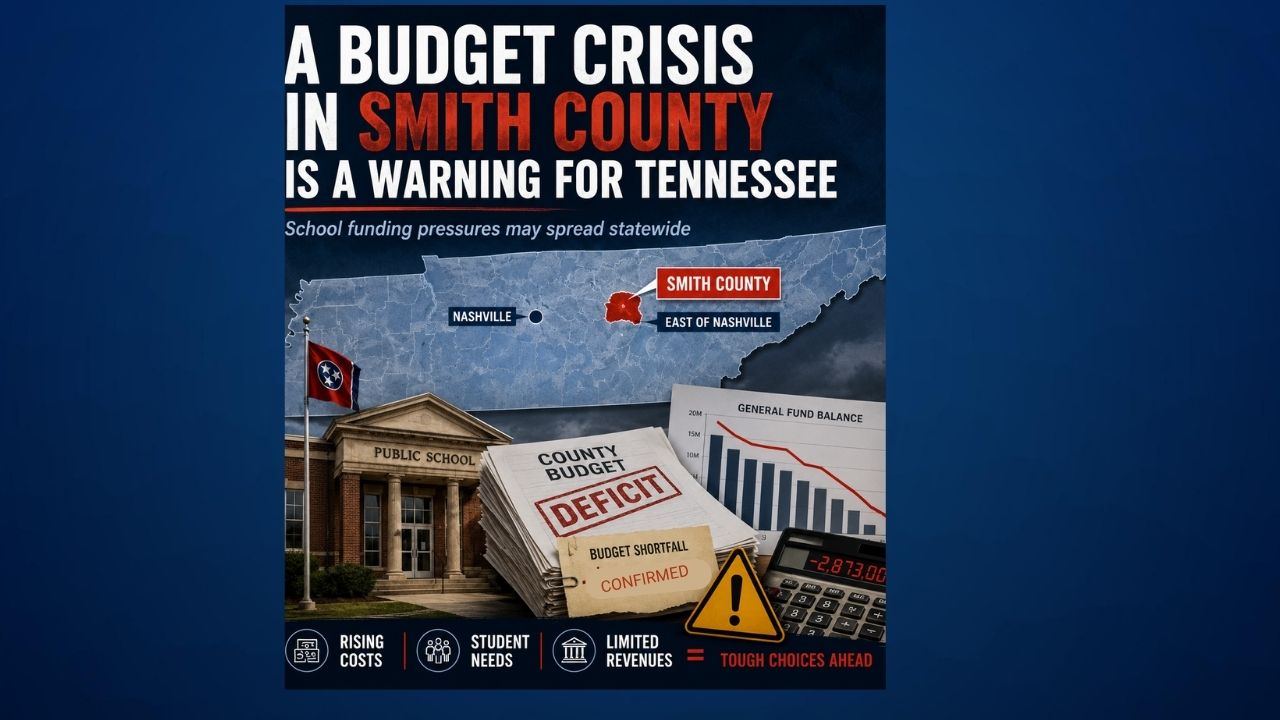

What is unfolding in Smith County, Tennessee, regarding its education budget crisis may soon be mirrored in other communities across the state. Other communities across the state may want to pay attention to what is happening in the small county 60 miles east of Nashville.
In recent years, Smith County Schools have grappled with persistent budget shortfalls, particularly in the general-purpose budget. The spring 2026 proposals highlighted a significant $7 million deficit and ongoing reliance on fund balances.
In April 2026, the Smith County School Board reviewed an ambitious general-purpose budget proposal that projected about $32.6 million in income against estimated expenses of nearly $39 million, leaving a roughly $7 million gap. The budget included proposed capital projects such as drainage repairs, field lights, and a turning lane. The board ultimately decided to table the budget and scheduled a work session for May 4 to explore lower-cost alternatives.
Discussions and public feedback in Smith County indicated that revenues—primarily from state and local sources—did not align with the proposed expenditures. Concerns were raised about the potential use of fund balances, the need to maintain a required ~3% emergency reserve, and the long-term sustainability of the budget without additional local revenue sources, such as property taxes. By mid-May 2026, the board voted 5-3 to present a budget package of approximately $39.3 million to the county commissioners.


In August 2026, the Smith County Commission approved a $35 million budget for the school system as part of the county’s fiscal year 2026-27 budget. This amount falls between the Board of Education’s projected revenue of about $33 million and its proposed expenditure of about $37 million. Notably, no increase in the county property tax rate was planned, and the certified rate remained at $1.3023.

To address budgetary needs, Smith County Commissioners advanced a referendum which will now be on the November ballot. The proposal would raise the county sales tax rate from 2% to 2.75% in unincorporated areas and South Carthage. Meanwhile, the cities of Carthage and Gordonsville already operate at a higher rate. If approved, at least half of the additional revenue—estimated at roughly $450,000–$500,000—would be allocated to the schools.


Audit data for the fiscal year ending June 30, 2025, showed that General Purpose School Fund revenues of about $32 million were insufficient to cover higher expenditures, contributing to a decline in the fund balance. Total governmental fund expenditures for the school department exceeded $44 million, including federal projects, cafeteria operations, and internal funds. Additionally, audit findings included a $68,323 IRS penalty for noncompliance with the Affordable Care Act.
Previous budget cycles also featured contentious debates over proposed spending increases for raises, insurance, and capital projects, compared with available revenues and fund balances. County commissioners have repeatedly expressed concerns about long-term sustainability and the potential burden of future tax increases.
District enrollment has hovered around 3,000 students across nine schools in recent years, with funding primarily from state sources, followed by local and federal funds.
These challenges highlight common pressures facing K-12 education in Tennessee: the end of ESSER funding, inflationary pressures, rising personnel costs, the complexities of the state funding formula (TISA), limited growth in local revenue, and pressing capital needs. Although fund balances have served as a temporary solution in recent years, recurring deficits raise concerns about achieving long-term structural balance without additional local support or spending adjustments.
When the state implemented the new funding formula, we warned state leaders that although nearly two-thirds of school districts would receive higher actual funding, they would receive a smaller share of state funds than under the previous formula. This could lead to local tax increases once the hold-harmless provision expires in 2027. Unfortunately, this prediction is proving accurate, and next year is approaching.
Additional challenges related to shifts in fiscal capacity, the accuracy of economically disadvantaged identification, data quality, and year-to-year predictability remain significant hurdles. The next governor will need to lead discussions on these issues, especially as the main TISA hold harmless provision (BEP Transition Funding) concludes after the 2026-27 school year. Next year, districts will fully transition to standard TISA allocations without further BEP transition support, which could pose challenges for even more communities.
JC Bowman is the executive director of Professional Educators of Tennessee. He is the contributing editor to TriStar Daily.