
Foreign leaders who observed the planning, precision and expertise of the U.S. military operation that successfully and cleanly penetrated Venezuelan space and snatched Maduro are likely in intense meetings assessing the operation.
Without a doubt, no other military on Earth could have accomplished what the US military did in the time frame they used. Foreign political and military leaders know that. The radar and air defense systems China and Russia provided to Venezuela failed in spectacular fashion. 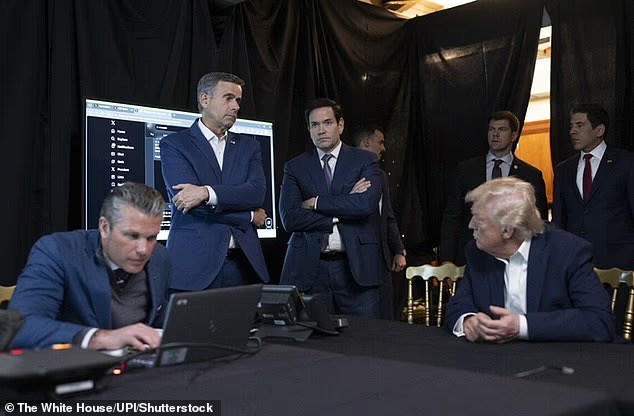
Russian and Chinese-supplied air defenses were defeated by the U.S. using cyber warfare to blind radar and electronic systems, allowing undetected strikes on air defense sites, exposing the vulnerability of brute-force radar against modern electronic warfare and stealth.
That technological advantage lead directly to the capture of President Maduro and highlighted the U.S. superiority over existing systems. That gap is wide and foreign military operations are now trying to figure out how to narrow it as soon as possible.

But another group that should be conducting serious after-action analysis and a frenzied review of failure that was almost as significant as the Venezuelan air defense systems must be the mainstream U.S. and international legacy media. The complete absence of any live reporting by traditional media as bombs and missiles were striking Caracas may represent a huge turning point that is thus far generating no attention.
During the first hour or so of the U.S. military strikes on Caracas the video images that quickly circulated worldwide were being generated by Venezuelans using their cell phones and in many cases texting or emailing them to family and friends outside the country. Those video images of the bomb and missile strikes were quickly posted in real time on X. The images of U.S. helicopters flying over Caracas, including several Chinook helicopters, indicated that troops were being deployed as “ boots on the ground”. Those visuals made it clear to anybody observing who had even limited military knowledge that this mission in Caracas was not just about incredibly destructive and targeted airstrikes. Some other mission was underway, which we soon learned was capturing and removing Moduro from his “secure location.”
Live coverage of breaking news was being provided by individuals posting on X in real time while CNN, Fox News, and others slept in or ran delayed newscasts. LiveNOW from Fox was running an hours old news conference about a terror threat thwarted in North Carolina as bombs and missiles were exploding in Caracas.
The significance of what was being shared on X is underlined by what President Donald Trump, Secretary of State Marco Rubio, Secretary of War Pete Hegseth, and others were watching from the Mar-a-Lago war room. They didn’t have Fox News or CNN in the background. They were watching LIVE what was being posted from Caracas via X!!
Eventually, the networks reached out to stringers in Caracas to play catch-up with some on the ground reporting. But when the action was playing out, X was the only source providing live and real time information.
A few generations ago people got most of their news when the nighttime network host came on the air at the end of the day and informed the nation “and that’s the way it is.”
News consumers today aren’t that patient. They want the information now. And now means “right now.” Our ubiquitous cell phones give us instant access, and an insatiable desire to know what is happening in real time, and with an immediacy previous generations could not have imagined.
And not just locally (like “real time” traffic reports and weather) or nationally, even if we’ve never actually been to Topeka, Kansas where a school shooting or a factory fire is currently taking place. We want that same information globally. Instantly.


One of the lessons from what happened in Venezuela this week is not just the fact that the most current radar and air defense system systems may have been aged out and supplanted by newer technology. Likewise the modern news media model has been exposed as archaic and outdated; unable to keep pace with viewer demands and expectations. X delivered in a way they did not.
Can news networks and media outlets respond, adjust and adapt? Possibly. But simply branding yourself as a 24 hour news channel isn’t enough. You have to deliver. Just like X actually did! As the legacy media continues to rely on the old model, generating more and more layoffs in their newsrooms, instant gratification news-seekers will increasingly check X first, and possibly exclusively.
Steve Gill is editor and publisher of TriStar Daily.
Author