
Last week 149 potential GOP candidates for the May primary for local races were advised of remaining deficiencies in the qualification process that put them at risk of not being on the ballots. Over 1,000 other candidates had already met the standards to qualify as GOP primary contenders at that time.
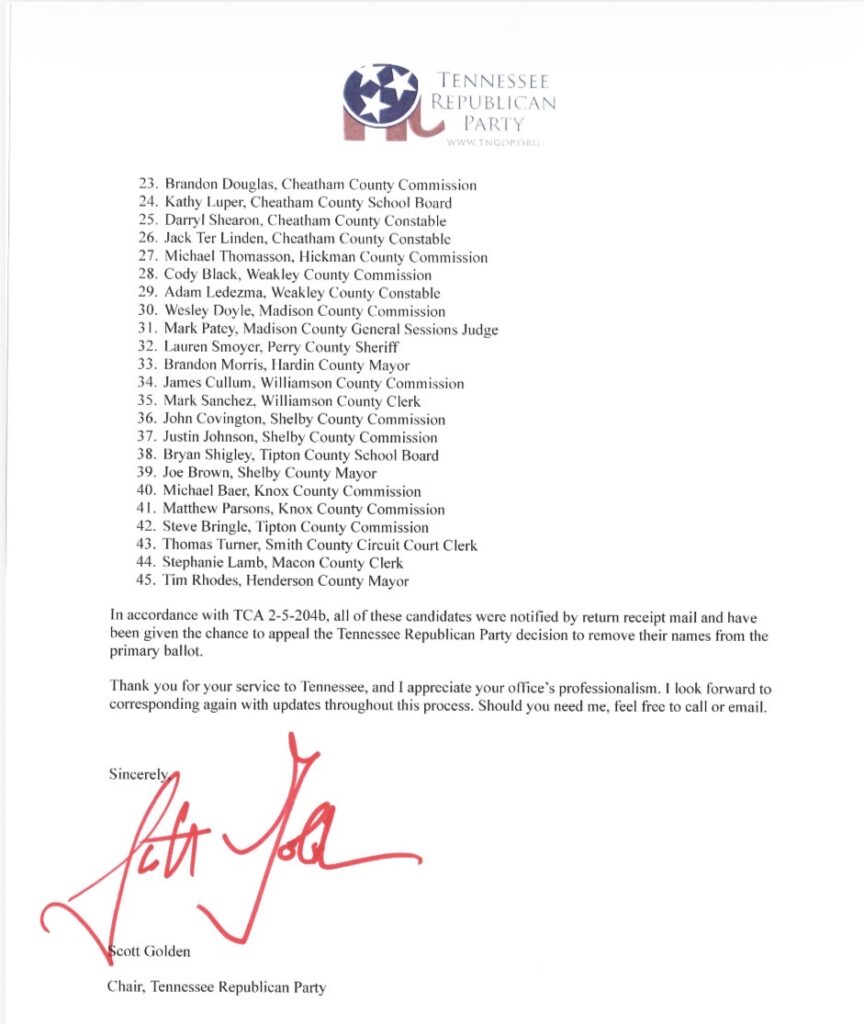
Today, Republican Party Chair Scott Golden issued a list of those who have finalized their compliance with the state party rules, with 104 of the 149 qualifying for the ballots as “bona fide” Republicans. Many of those listed in the previous state party advisory simply needed to pay the required fee or complete their processing paperwork.
Forty-five others were identified as having failed to meet the required standards to be listed as a Republican candidate, with some having chosen to run as independents, failing to successfully appeal the decision of the party, or simply dropped their campaign for office.
“We followed the detailed process under state law and our party by laws to determine who does and does not qualify to be listed as a Republican candidate in the May primary elections for local offices,” Golden pointed out. “In the next week we will follow the same process for those seeking to run as a Republican for state offices in August.”
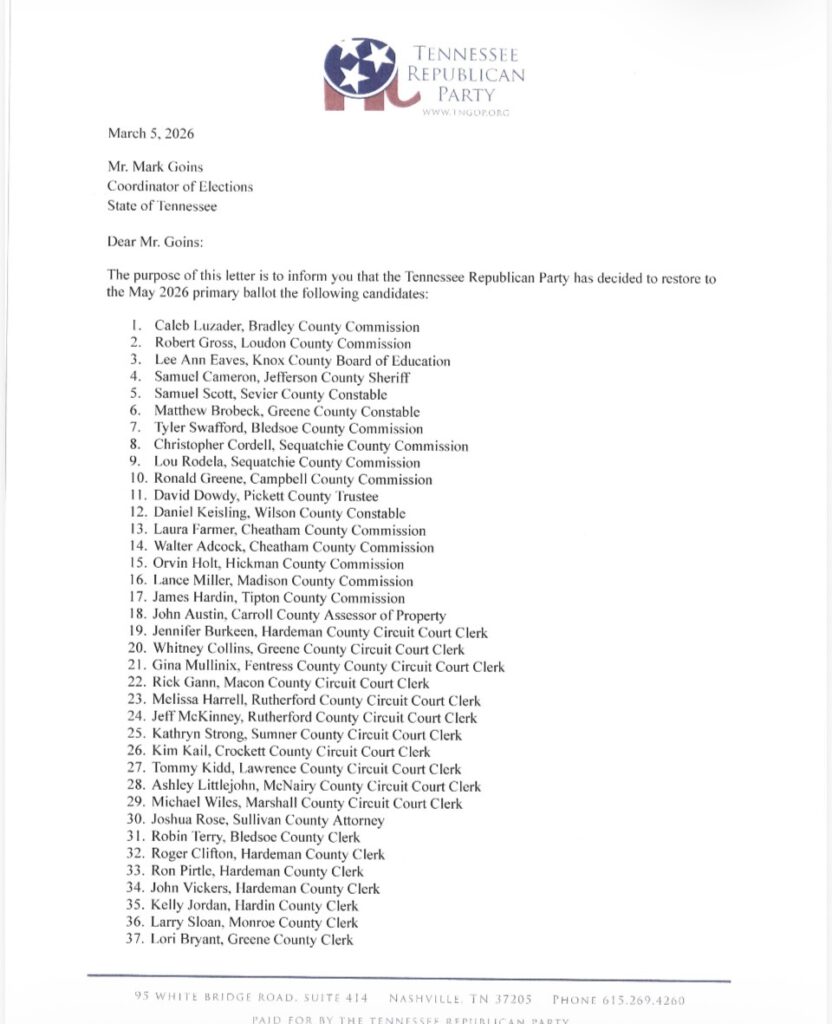
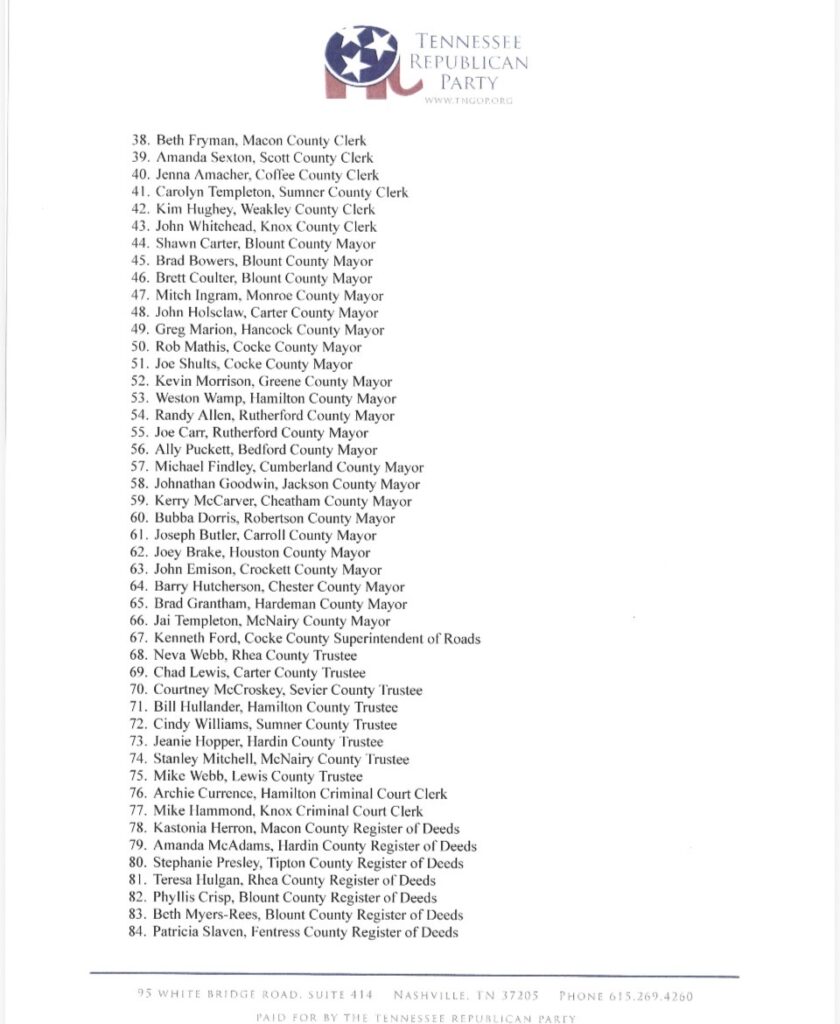
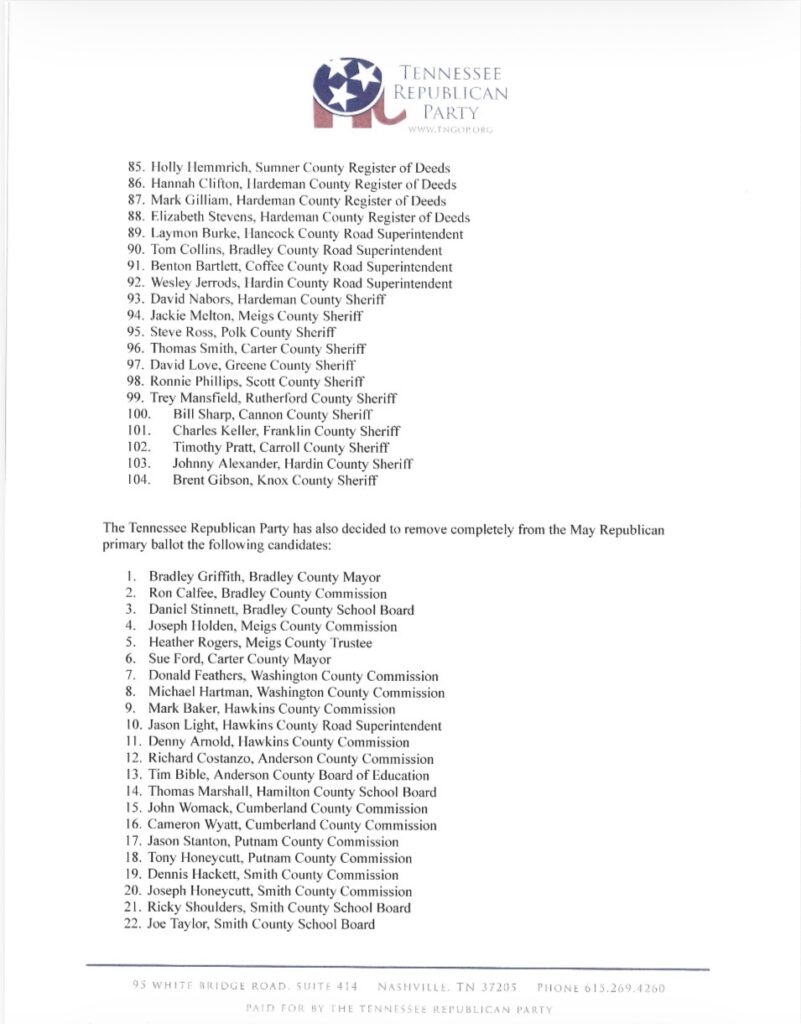
Golden added that while some criticize the “bona fide” process that the Tennessee Republican Party has adopted, other states in the southeast are seeking to adopt the methods used by Tennessee either legislatively or through their own state party bylaws. “North Carolina just conducted their Republican Party primaries without similar guard rails in place, and at least one candidates who has openly admitted to being Democrat and supporter of ISIS won her State Senate primary by running unopposed, but will face opposition in the general election. The state’s Republican leadership now has to deal with the fact that Democrats are openly running as “Republicans“ in some elections,” Golden said. “Like it or not, our process helps us avoid that outcome.”

If Tennessee adopts a party registration process, as some Republicans advocate, the bona fide process could effectively be eliminated, thereby allowing Democrats to simply register as a Republican just prior to a qualification deadline, despite a track record of voting for and donating to Democrats.


One Republican activist pointed out that those who vote in upcoming contested Democratic primaries, including local elections, would be barred from running as a bona fide Republican for up to 10 years under the current bylaws. “Contested primaries among Democrats are a great way to force people to show their true colors, particularly and heavily Republican counties,” they noted.
Steve Gill is editor and publisher of TriStar Daily.
Author