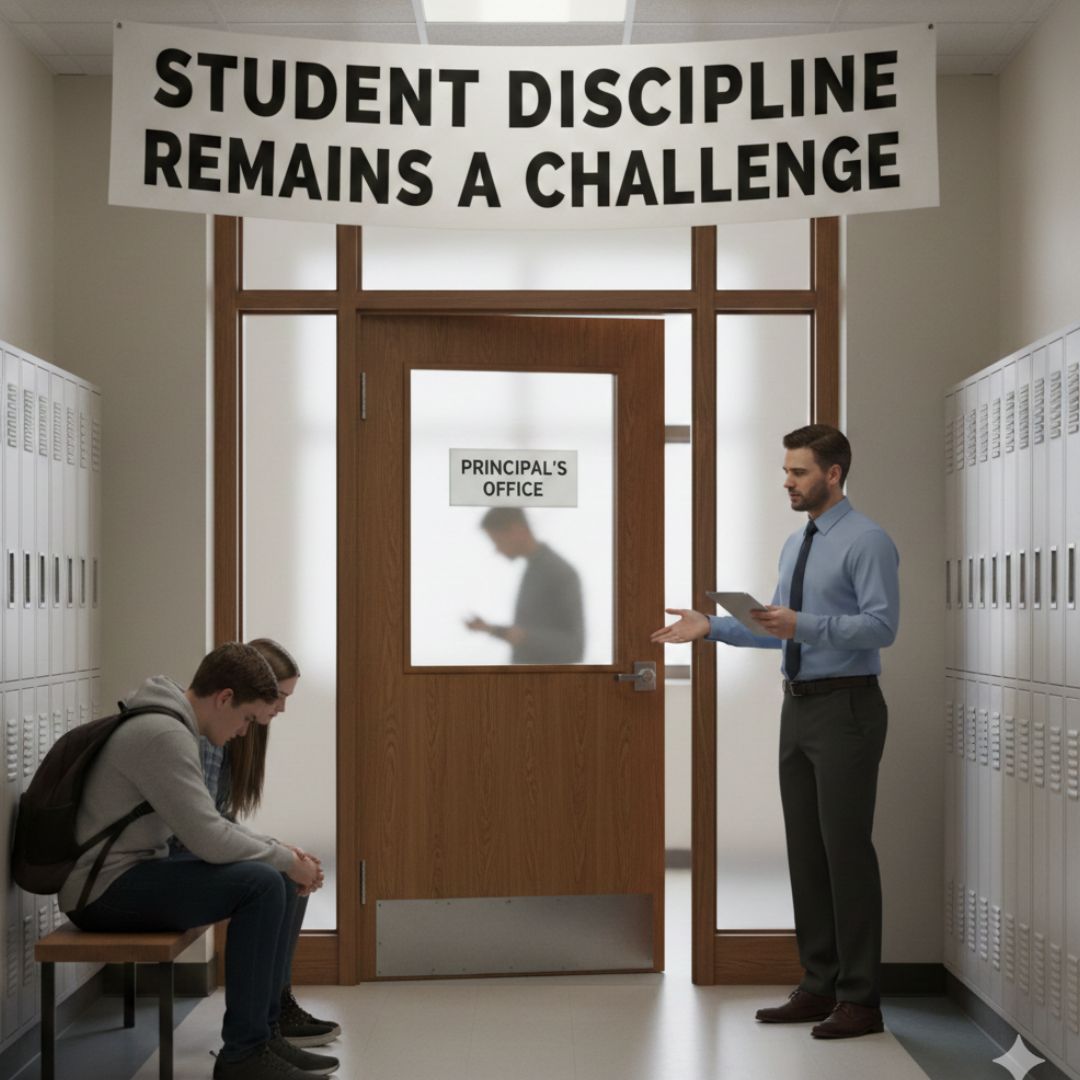
Student discipline has become a hot topic, not just in Tennessee but across the nation, driving teachers out of the classroom faster than you can say “detention.” Surveys from Tennessee educators consistently place disruptive student behavior at the top of their concerns—often ranking it even higher than low pay, heavy workloads, and questionable administrative support.
Teachers have reported spending so much time managing unruly behavior that their morale sinks faster than a lead balloon, leading to burnout. This is especially true for early-career teachers, who find themselves tangled in a web of discipline issues.
In response to this crisis, Tennessee has enacted legislative measures such as the Teacher’s Discipline Act. Passed in 2021, this act gives teachers a fighting chance to reclaim their classrooms by allowing them to remove chronically disruptive students.
The law lays out a uniform process: teachers can file written referrals for behavior violations, and principals must respond, possibly removing students who consistently disrupt learning or threaten safety. Local education agencies (LEAs) are required to back teacher authority while adhering to evidence-based interventions and federal laws. We do need more clarity —on behaviorally disruptive students with disabilities. Rep. Scott Cepicky (R-Culleoka) and Sen. Joey Hensley, who surely deserve a gold star for their efforts on discipline issues.
Rep. Cepicky, who sponsored the Teacher’s Discipline Act in the Tennessee House of Representatives believes strong discipline means better classroom management and fewer distractions for everyone involved. He’s also been pushing for proactive measures to minimize disruptions, including policies on device use and online safety, all in the name of creating a better learning environment.
My organization, the Professional Educators of Tennessee, a non-partisan teacher association, has been sounding the alarm about this issue for decades. In my recent commentary, fittingly titled “Student Discipline Remains a Challenge,” I pointed out that, despite some progress, the issue of discipline continues to plague teacher retention and school effectiveness.
The Teacher’s Discipline Act has been a key to restoring order, allowing teachers to focus on what they do best: educating. But needs better implementation at the local level. Oklahoma is now trying to jump on the bandwagon and mirror the Tennessee legislation in its legislature.
We are still advocating for accountability for disruptive or violent students, better resources for educators, parental transparency about behavior, consistent policies, and data-driven strategies. Without a focused approach to discipline, keeping dedicated teachers in the classroom will become even more difficult. We need a collective commitment to safe and orderly classrooms.


While some recent Tennessee Educator Surveys suggest that a few teachers feel discipline is being managed effectively, with improvements in areas like cell phone policies, challenges still loom large, especially for newer educators and those facing high-disruption classes. Ongoing and future efforts aim to balance accountability with supportive interventions to help retain teachers.
Tennessee’s targeted discipline reforms put it ahead of the curve in tackling this major retention issue compared to states with less specific legislation. Still, like much of the nation, real progress hinges on combining solid discipline policies with competitive pay, adequate resources, and supportive leadership to truly stem the tide of teacher attrition.
JC Bowman is the executive director of Professional Educators of Tennessee and the contributing editor to TriStar Daily.
Author