By: Clayton Wood, Contributing Writer
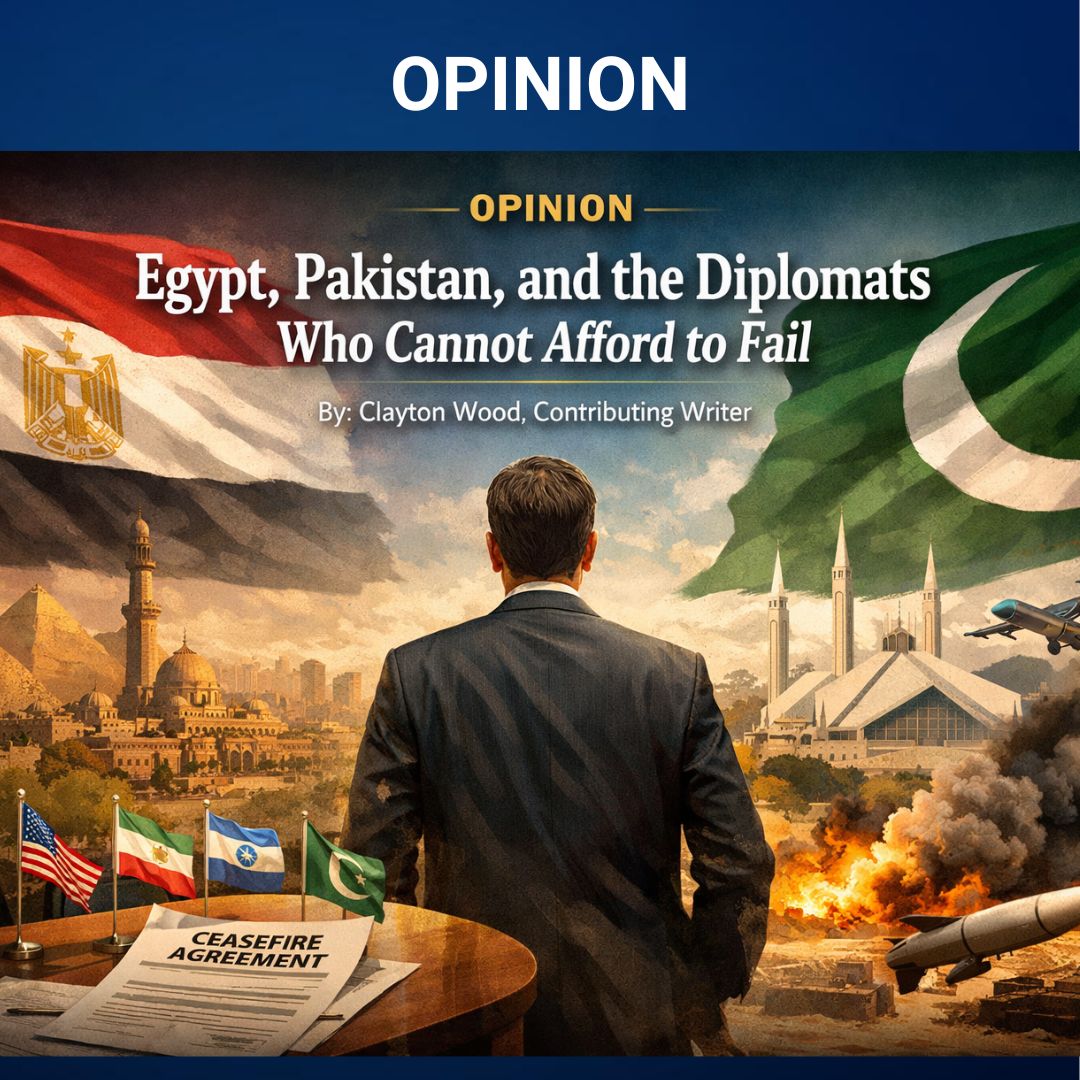
Egypt and Pakistan have now emerged as the primary mediators pushing hard for a ceasefire deal. Pakistan delivered the American 15-point proposal to Tehran directly. Egypt is coordinating the broader mediation framework alongside Oman and Turkey. These are not neutral parties volunteering their diplomatic services out of goodwill. These are governments facing domestic crises severe enough that failure is not an abstract policy outcome for them. It is an existential political threat.
I laid out the economic case for both nations in the previous essay. What is worth adding now is that both countries are functionally at the table as advocates for resolution, not just messengers. The Egyptian official who described the 15-point plan as essentially a comprehensive deal, similar in scope to the Gaza framework, is not a bystander. He is a man whose government has already raised domestic fuel prices 17 percent in a single emergency move and watched the Egyptian pound hit a record low.
Pakistan’s Prime Minister offered Islamabad as the site for in person talks as soon as Friday. That offer did not come from diplomatic ambition. It came from a government running emergency austerity on a four-day work week while managing a nuclear arsenal.
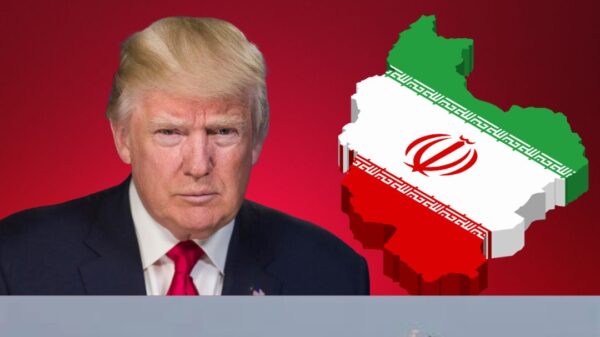
When Iran receives pressure not from Washington but from Muslim majority nations whose populations are paying 100 dollar oil prices and watching their economies fracture, it faces a different kind of argument than American ultimatums. The Iranians can dismiss Trump as an aggressor. It is much harder to dismiss Cairo and Islamabad as agents of Zionism.
Iran Hit Its Muslim Neighbors Harder Than It Hit Israel
One fact that has received far less attention than it deserves: Iran did not primarily focus its missile and drone campaign on Israel. It distributed that fire across every country in the Gulf Cooperation Council. According to data from the UAE’s Ministry of Defense, Iran fired 357 ballistic missiles, 1,806 drone attacks, and 15 cruise missiles at the UAE alone as of March 24. The Palm Jumeirah was hit. Dubai International Airport was struck. The Burj Al Arab caught fire from debris. Iranian President Pezeshkian apologized to Gulf neighbors on March 8 and ordered strikes halted. The IRGC ignored him and kept firing. That leadership split is significant on its own, but the larger point is this: Iran targeted every GCC country.
Bahrain, Kuwait, Saudi Arabia, Qatar, Oman, and the UAE all absorbed Iranian fire. Former CIA Director David Petraeus called it a likely strategic error that may pull additional countries directly into the war against Iran.
This is not surprising if you understand the region’s history. The post Ottoman order in the Middle East has been defined by persistent Iranian attempts to destabilize and project influence into Sunni Arab territory. Persian and Arab are different peoples, different languages, different ethnic identities. Twelver Shia and Sunni Islam share a name and a prophet and very little else in terms of political solidarity. The IRGC has spent decades funding, training, and directing proxy forces in Yemen, Iraq, Lebanon, Bahrain, and Gaza, not as partners but as instruments for Iranian regional dominance. The Gulf Arab states have known this for a long time. What changed in the last four weeks is that Iranians fired missiles directly at the Palm Jumeirah and Dubai International Airport, not just through proxies in someone else’s country. The Gulf’s carefully maintained posture of managed distance from direct Iranian confrontation has been shattered.
What Trump’s “Present” Might Actually Be: A Negotiator’s Speculation
I want to be clear that what follows is my own speculation, not reporting. But I spent enough time enjoying negotiation competitions and subsequent real negotiations to have a somewhat informed guess.
Trump said Iran gave the United States a present worth a tremendous amount of money, that it was oil and gas related, connected to the Strait of Hormuz, and that receiving it proved they were talking to the right people, meaning people who had the actual authority to deliver on what they promised.
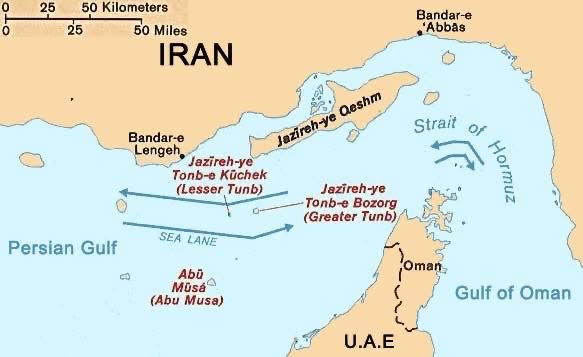
My guess is the three islands.
Abu Musa, Greater Tunb, and Lesser Tunb are three small islands in the Strait of Hormuz that Iran seized from the UAE in 1971. The UAE has never stopped claiming them. A UN dispute over sovereignty has been pending since 1980. The islands are Iranian military installations housing small boat operations, mining capability, and potentially anti-ship missiles. They sit directly in the corridor that matters most for reopening the strait to commercial traffic.
Now think about this from a pure negotiation standpoint. What does each party actually need?
Trump loves land. He thinks in assets and real estate and leverage. Returning disputed islands to a wealthy Gulf ally is exactly the kind of tangible, symbolic, photographable deal point that appeals to how he closes negotiations. The UAE has enormous financial resources, deep American partnership, and is now genuinely furious at Iran after absorbing thousands of missiles and drone strikes on their cities, their airports, and their iconic buildings. They want those islands back and they suddenly have far more American goodwill than they had six weeks ago.
Iran, meanwhile, is about to watch those same islands become worthless. If negotiations collapse by Saturday, the corridor around the strait is going to be sanitized in preparation for Marine operations and whatever comes next in the effort to reopen Hormuz. Those islands will be among the first things eliminated because they are military platforms sitting directly astride the shipping lane. Iran can either negotiate their return to the UAE as a deal point and claim it as a diplomatic concession and a sign of goodwill toward their Arab neighbors, or they can watch the islands get leveled and receive nothing for them.
That is a classic value-add negotiation structure. Iran gives up something it is about to lose anyway. The UAE gets back something it has wanted for 54 years. Trump gets a tangible, land based proof of concept that the Iranian negotiators on the other end of the line actually have authority. And the strait becomes meaningfully less dangerous for any subsequent transit operation.


I could be wrong. The present may simply be Iran allowing a limited number of tankers to pass through as a demonstration of good faith, which is also consistent with what Trump described. But if I were sitting across the table from someone who needed to prove they could deliver and who had an asset they were about to lose anyway, I know what I would put on the table.
The Vietnam Comparison Does Not Hold
The critics invoking Vietnam to argue against any ground component of this operation are not analyzing the current battlefield. They are importing a historical analogy that does not fit the operational reality.
Vietnam was a jungle insurgency against a motivated peasant army with a 16 year supply corridor, Soviet and Chinese backing, and a political will to absorb casualties that far exceeded American public tolerance. The comparison to Kharg Island assumes an Iranian military roughly equivalent to what existed on February 27. That military is gone in its essential form.
The United States has conducted over 6,000 combat sorties. Iranian ballistic missile attacks are down 90 percent from day one. Drone attacks are down 83 percent. The mine storage on Kharg Island has been destroyed. The missile storage has been destroyed. The air defenses, radar sites, and airport on the island have been destroyed. Over 100 Iranian naval vessels have been damaged or destroyed. The command and control infrastructure that coordinated Iranian coastal defense was targeted in the opening hours of the campaign.
But the deeper answer to the Vietnam comparison is the drone revolution. Air superiority in 2026 is not just F-22s and B-2 bombers. The United States can deploy loitering munitions in numbers and at costs that change the calculus for any force attempting to defend a fixed position from the mainland. Cheap drones built at scale, running on Starlink connected guidance that cannot be jammed by traditional electronic warfare, programmed to respond to launch signatures faster than a human trigger finger, can saturate a corridor before any surviving Iranian coastal asset fires a second salvo. The warthog and the Apache are not the whole story anymore. They are accompanied now by systems that cost a fraction as much, require no pilot, and can be forward deployed in quantities that overwhelm any point defense.
The soldiers landing on Kharg Island will not be landing on a defended shore. They will be landing on an island that has already been emptied of everything that could threaten them, at the end of a corridor that has been methodically cleared by the most lethal and technologically sophisticated military force in the history of armed conflict.
Saturday approaches.
Clayton Wood is a Knoxville pastor, Lawyer, and contributing writer for TriStar Daily.